Inspiration

My practice focuses on the idea of “arrangement and structure”, drawing inspiration from both architectural forms and natural systems. This project began with my observation of roof tiles, which create an ordered structure through repetition and layering, while also serving a protective function. This method of organisation led me to explore similar structures in nature, particularly the arrangement system found in pinecones, which follows the Fibonacci sequence.  

During my research, I realised that these seemingly strict and ordered structures are not completely static or rigid. Instead, they show a degree of flexibility and change under different conditions. For example, the scales of a pinecone have subtle gaps and layered relationships, allowing for slight movement and variation. This quality of being “ordered but not rigid” became a key focus in my work. 

Three Pinecone Pendants

In terms of materials and making, I translated these observations into layered metal structures using techniques such as folding and cold connections to create forms with a clear sense of rhythm and arrangement.

The pinecone form on the left functions as a small metal bell, producing a delicate sound as the wearer moves. The central piece is more compact in structure, while its rich surface texture enhances the tactile experience. The smallest form on the right was oxidised black and then engraved with fine textures, creating a subtle metallic sound through movement and contact during wear.

They are three small pinecone-inspired structures. On the left is a silver pinecone bell necklace with wide layered scales and a gradient colour effect. In the centre is an elongated silver pinecone form with textured surfaces. On the right is a small black-and-silver pinecone necklace featuring interlocking layered elements.

I am still fascinated by the arrangement found in pinecones, especially the spiral patterns related to the Fibonacci sequence. I see “arrangement” as a system that combines both structure and aesthetics. Repetition and layering create a sense of order and stability, while the relationships between different branches and levels bring rhythm and visual balance. Although these structures appear organised and controlled, there are still small gaps between each form, allowing space to “breathe.”

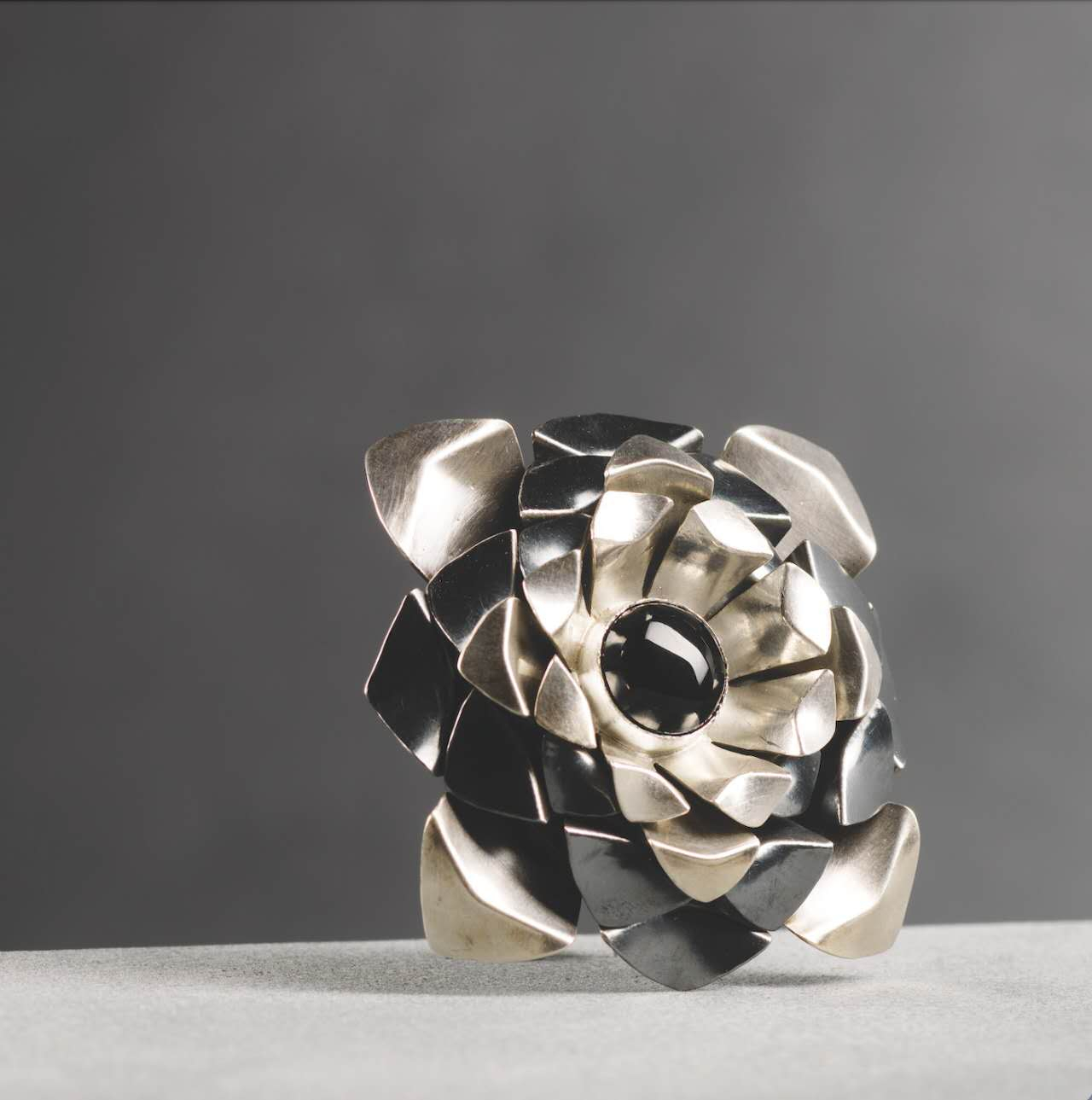
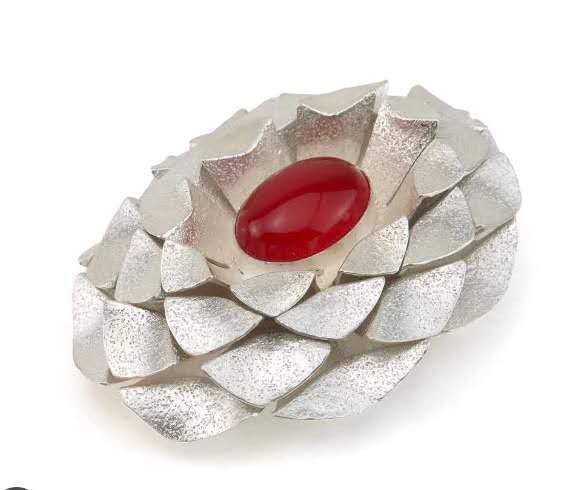
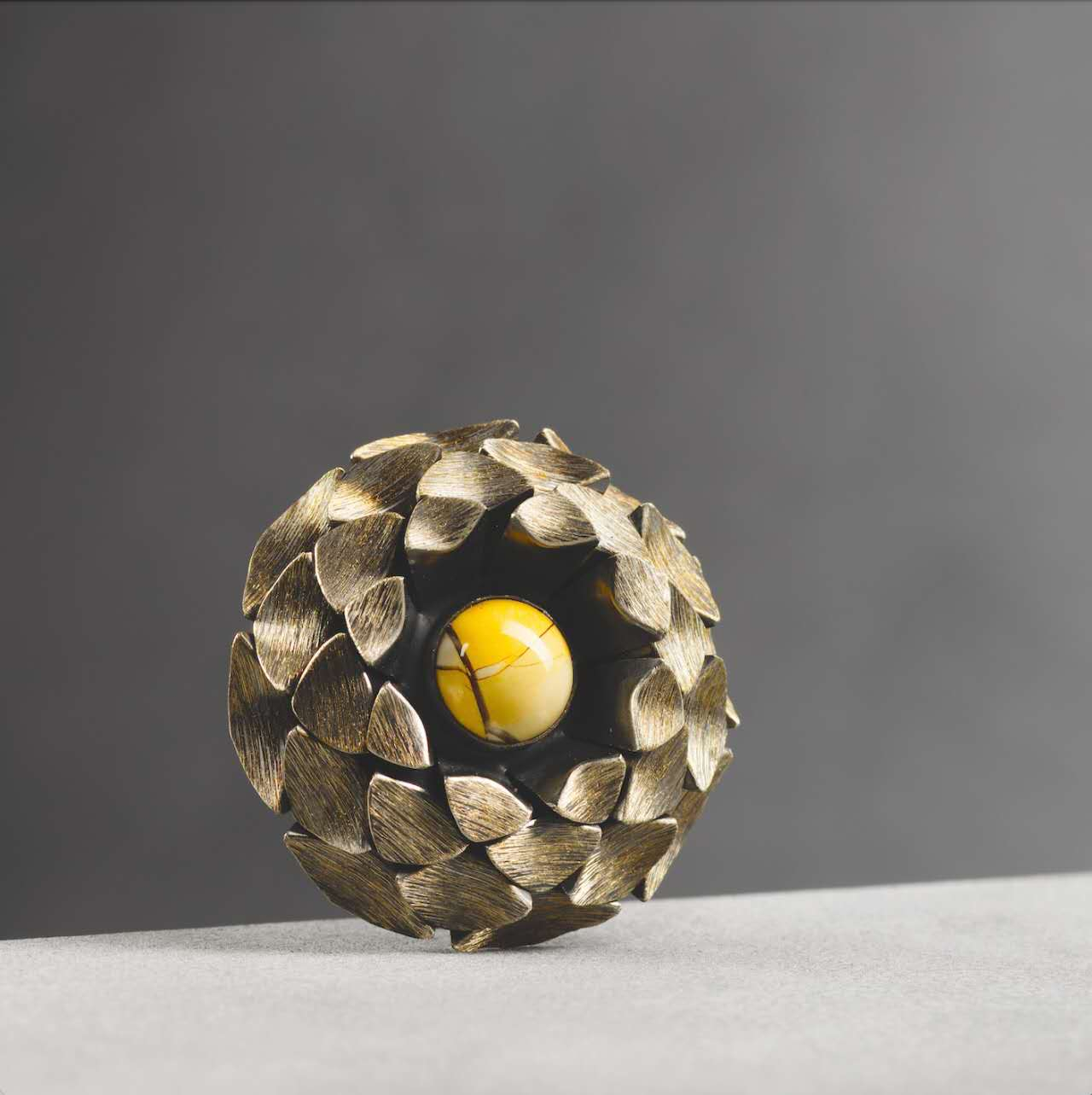
I explored this type of arrangement through different shapes, including circular, oval, and square brooches. The circular brooch features a jasper stone at the centre, surrounded by engraved and oxidised textures with warm golden tones. The square brooch is set with obsidian, with oxidised silver emphasising its geometric form. The oval brooch contains a carnelian stone and continues the use of richly textured surfaces.

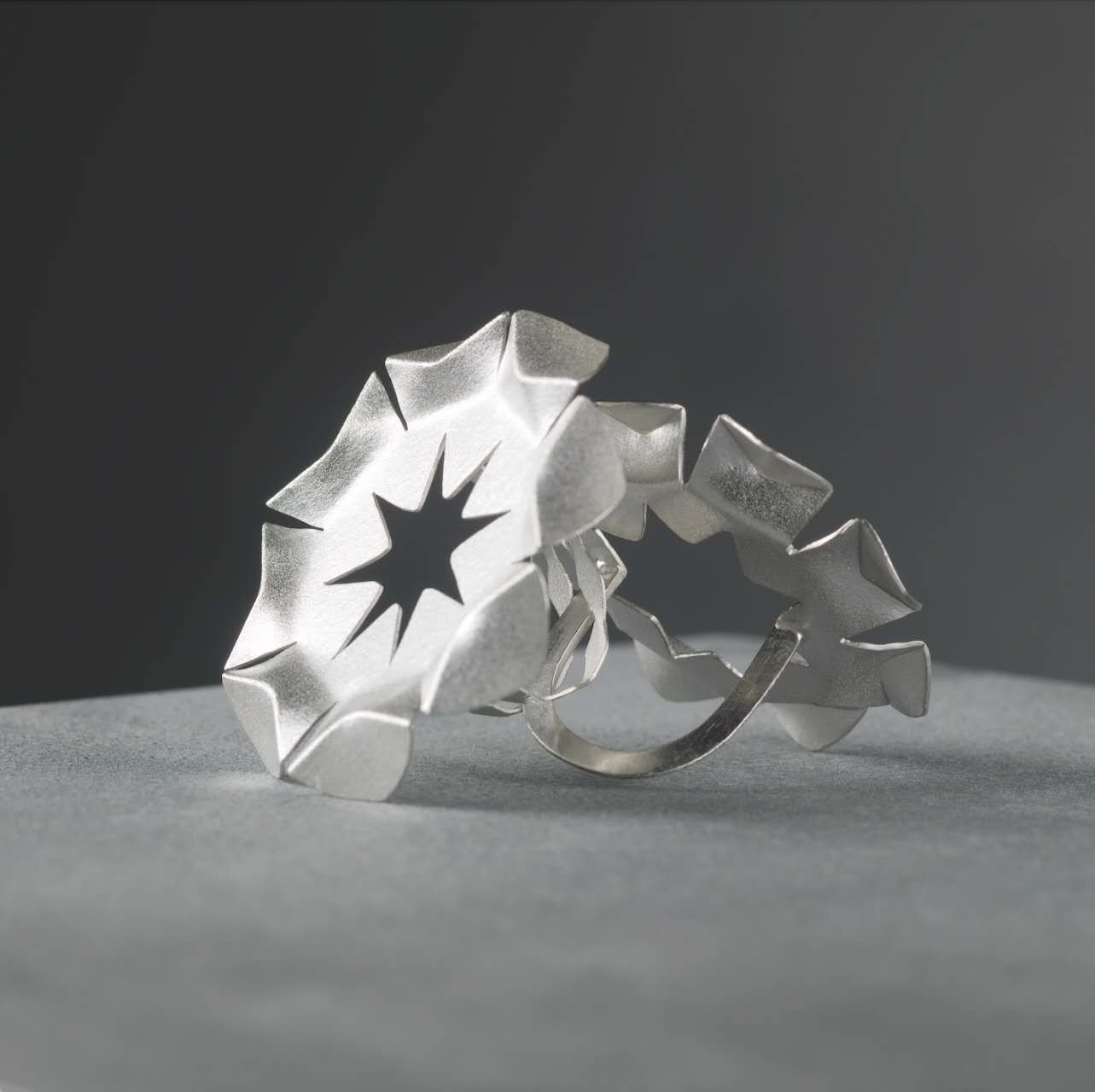
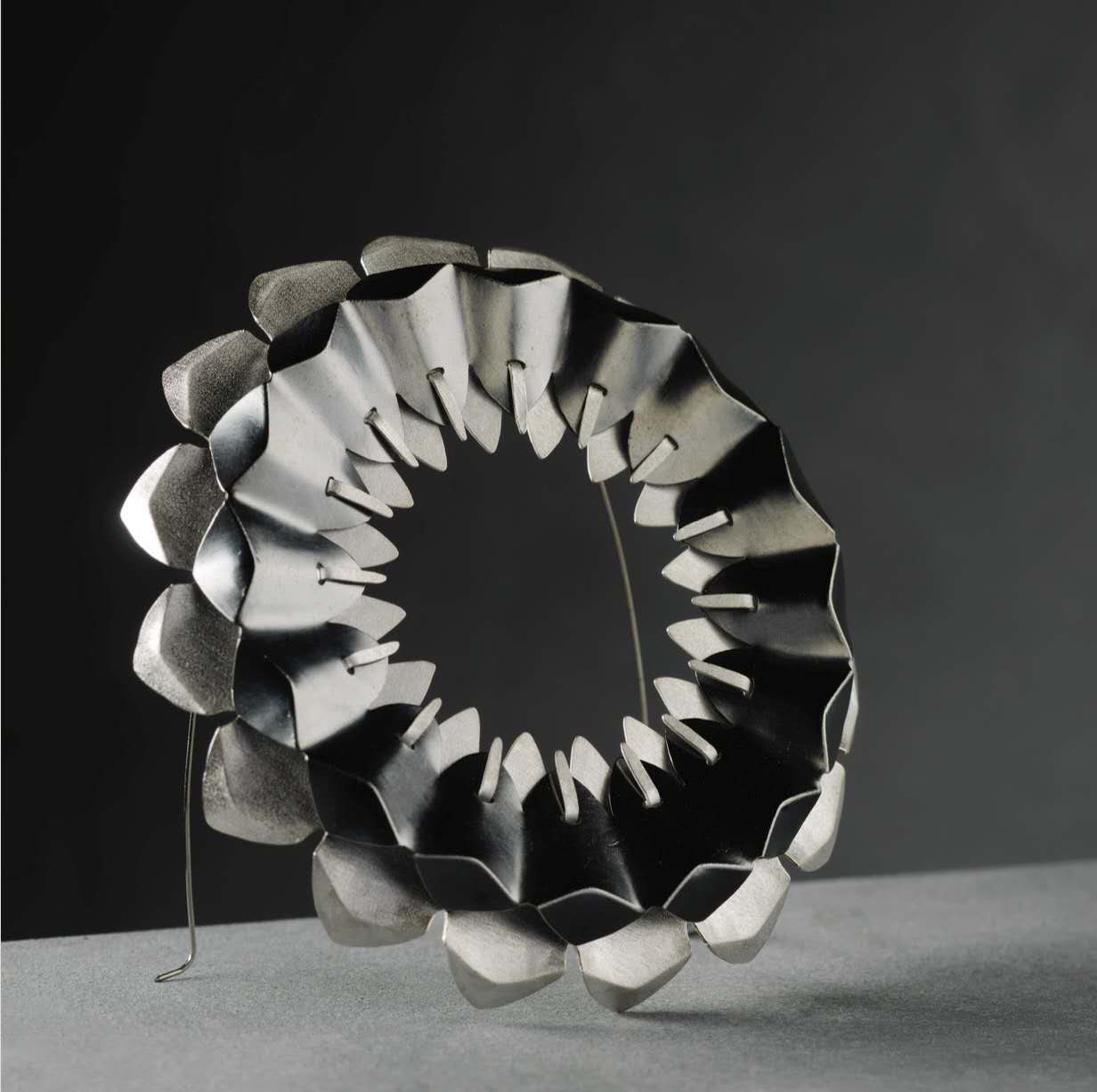
Through my earlier research into repetition and structure, I began to experiment more boldly by opening up the centre of the forms. I wanted to further explore the relationship between repeated structures and the gaps between them, while also challenging ideas around interactive jewellery.

For the brooches, I increased the overall scale and repeated the same patterns and arrangements to create stronger visual impact and to emphasise the beauty of repetition and structure.

For the rings, I introduced detachable elements, including a stackable ring structure, allowing variation and choice in how the pieces can be worn.

Skills & Experience
  • Jewellery Production
  • Exhibition Experience
  • CAD Modelling
  • Silversmithing
  • Stone Setting
Related topics