Loren Brundrett
A New Genesis: Architectures to Thrive in a Flooded World.


The specific challenge was the integration of water into an architectural design project.
Across the 2 semesters, the Zeelandic Islands, the low-lying, westernmost province of the Netherlands, was the location of the studio. The island of Walcheren was explored to address planetary-scale changes associated with rising climatic challenges, and our increased collective awareness of the entangled fragility of Earth’s ecosystems. The studio’s goal was to develop architectures that support novel methods of interspecies coexistence.
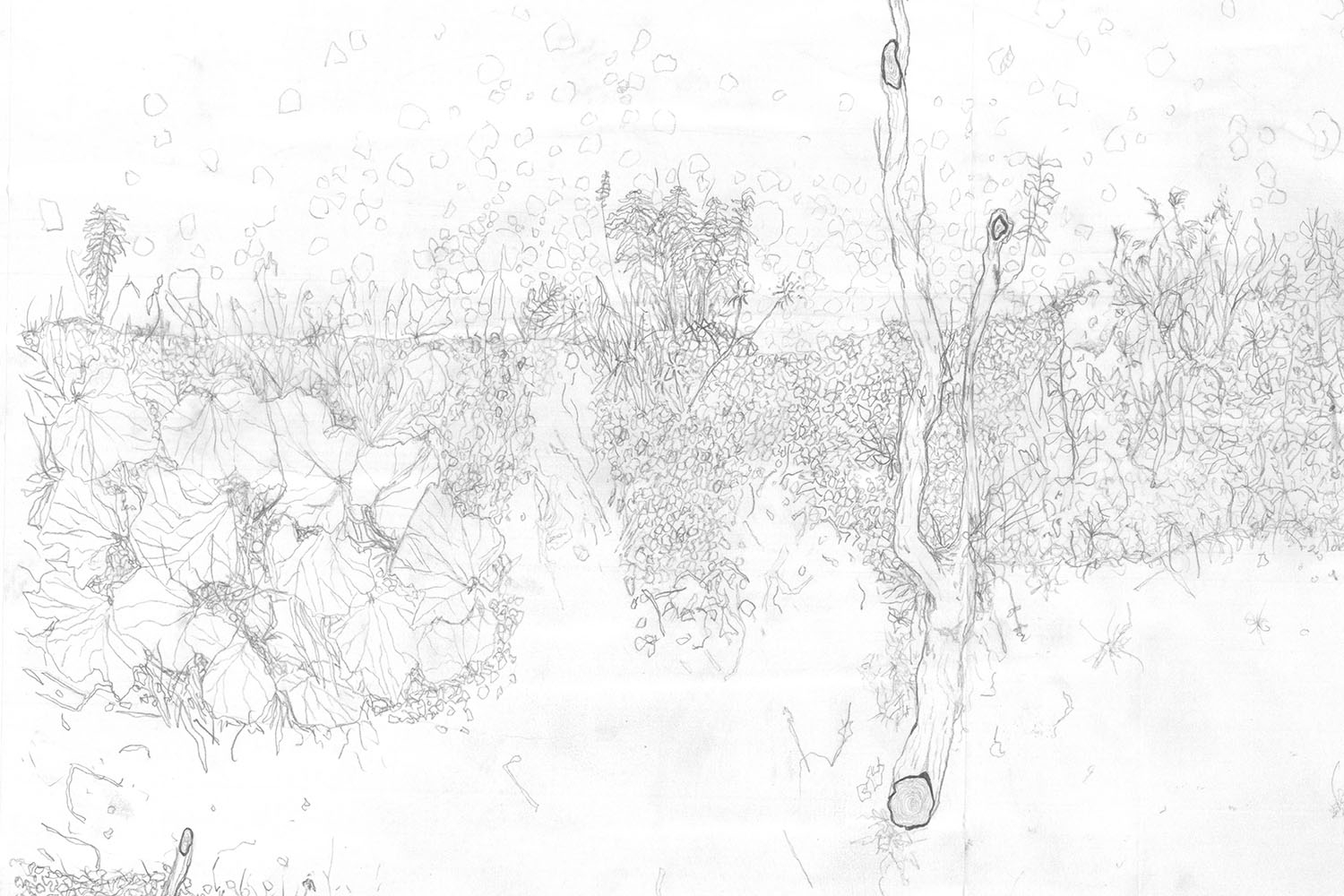
The year began by walking and observing the Water of Leith in Edinburgh to test ways of researching biodiversity and documenting a site in detailed micro-scale drawings and film recordings. There was a short design project to consider architecture at the body scale and our relationship to water – ‘a place to lie down’. Then a design of a ‘useful folly’ that later nested into a masterplan for an ‘Architecture of Entangled Ecosystems’ – a new, mixed-use neighbourhood urban plan within the flat, agricultural landscape of Zeeland.
Top image: The Swinging Tree. Chloe Tunnell.