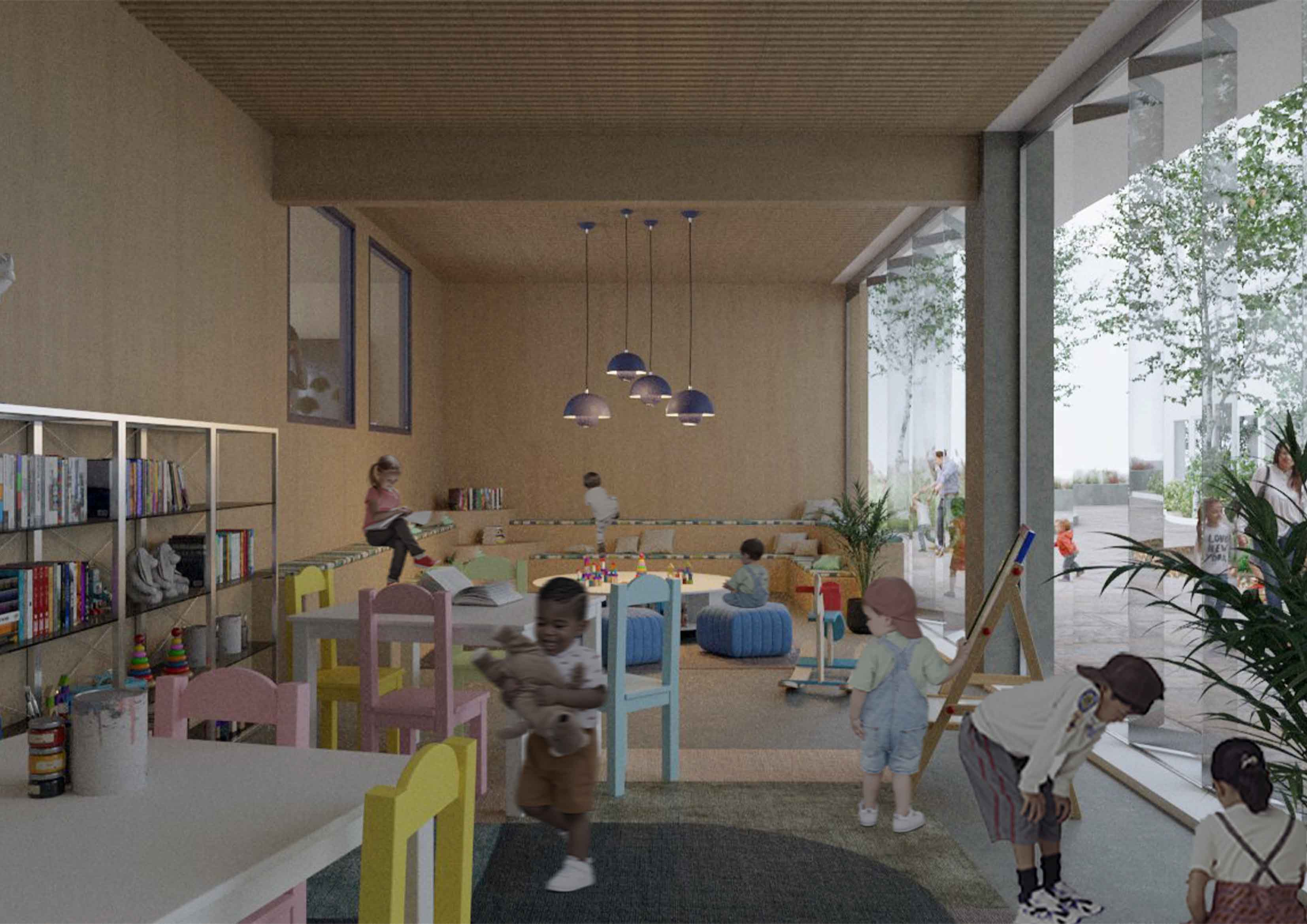
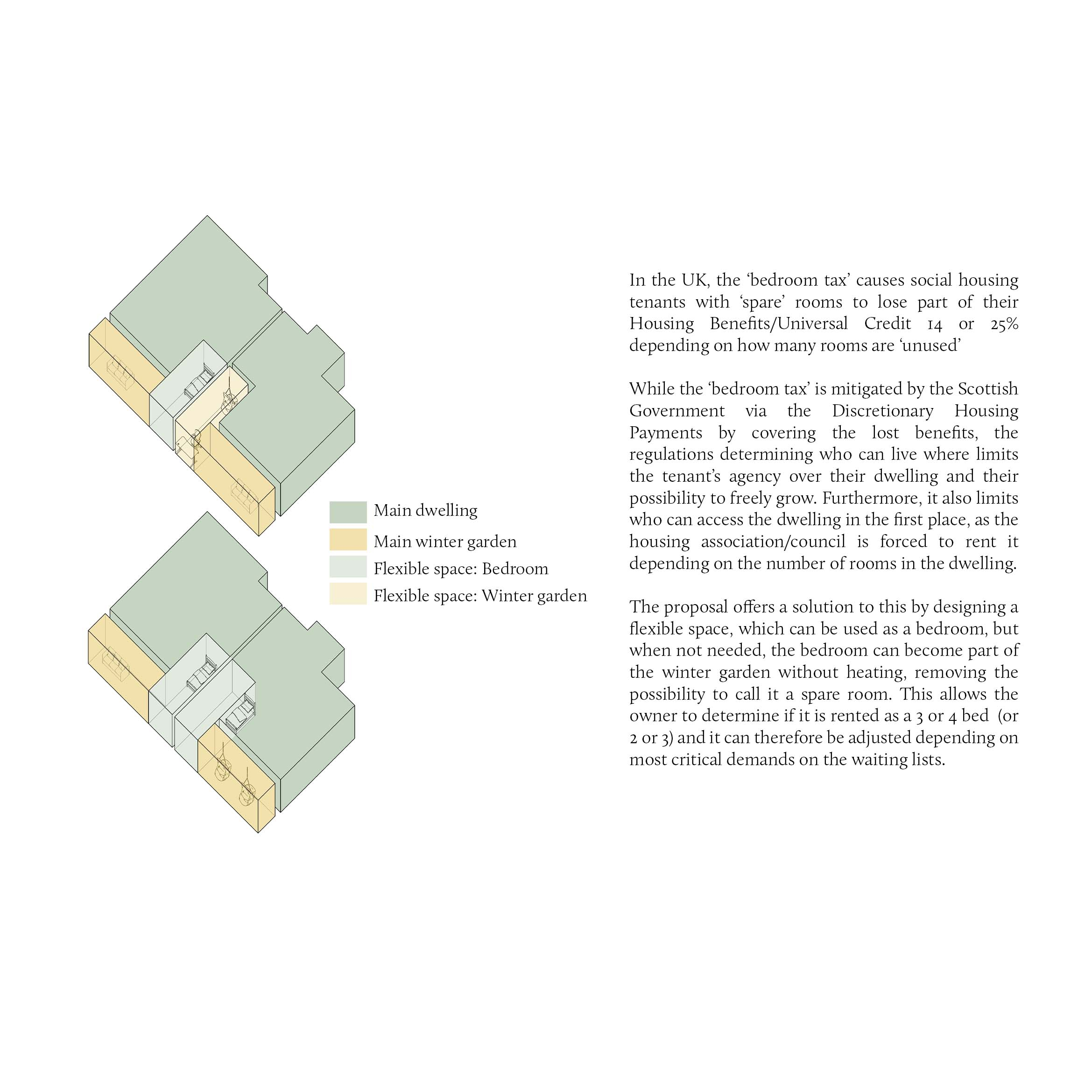
The narrative of the proposal draws from the three themes (at urban, building, and apartment scale) developed in Semester 01, responding to a range of local realities and/or critical issues, often stemming from political and regulatory constraints. Following in the footsteps of the studio theme, Doing Enough with Less, the project seeks to improve the lived experiences through specific interventions, rather than through an overarching, explicit theme. With this strategy, the project aims to address the climate emergency, the lack of after-school care, open boundaries and agency over the shared space, and flexibility within the dwelling with room to grow.
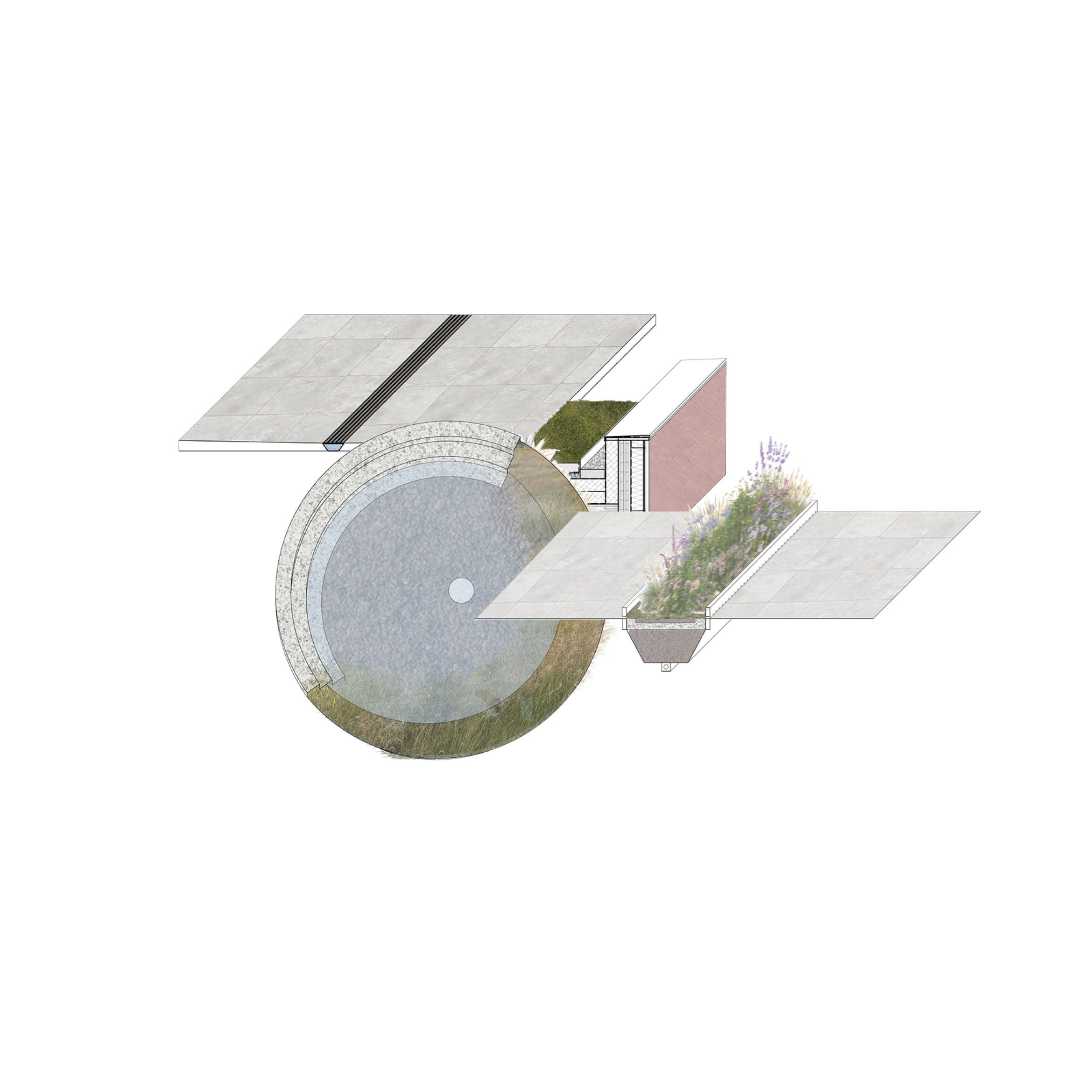
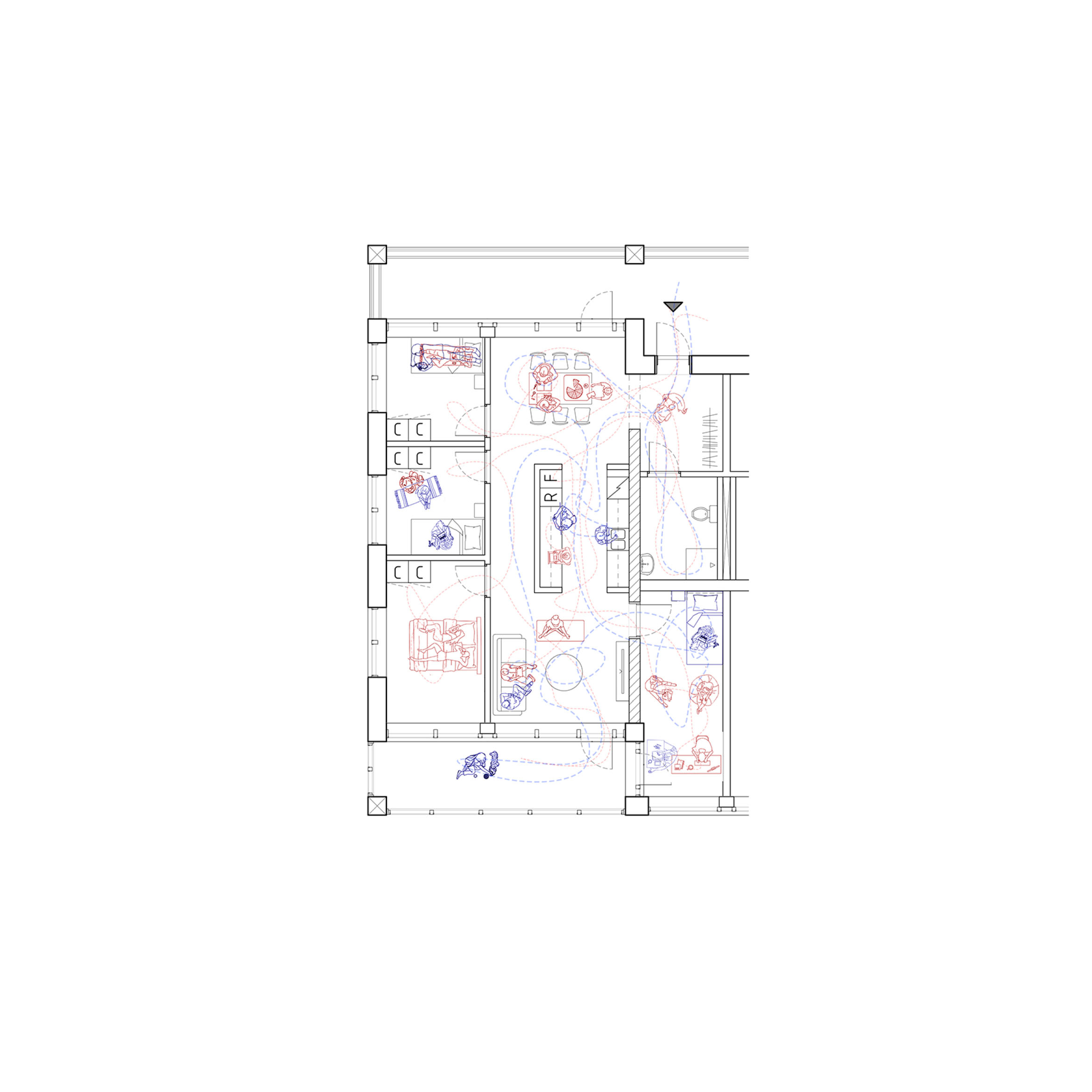
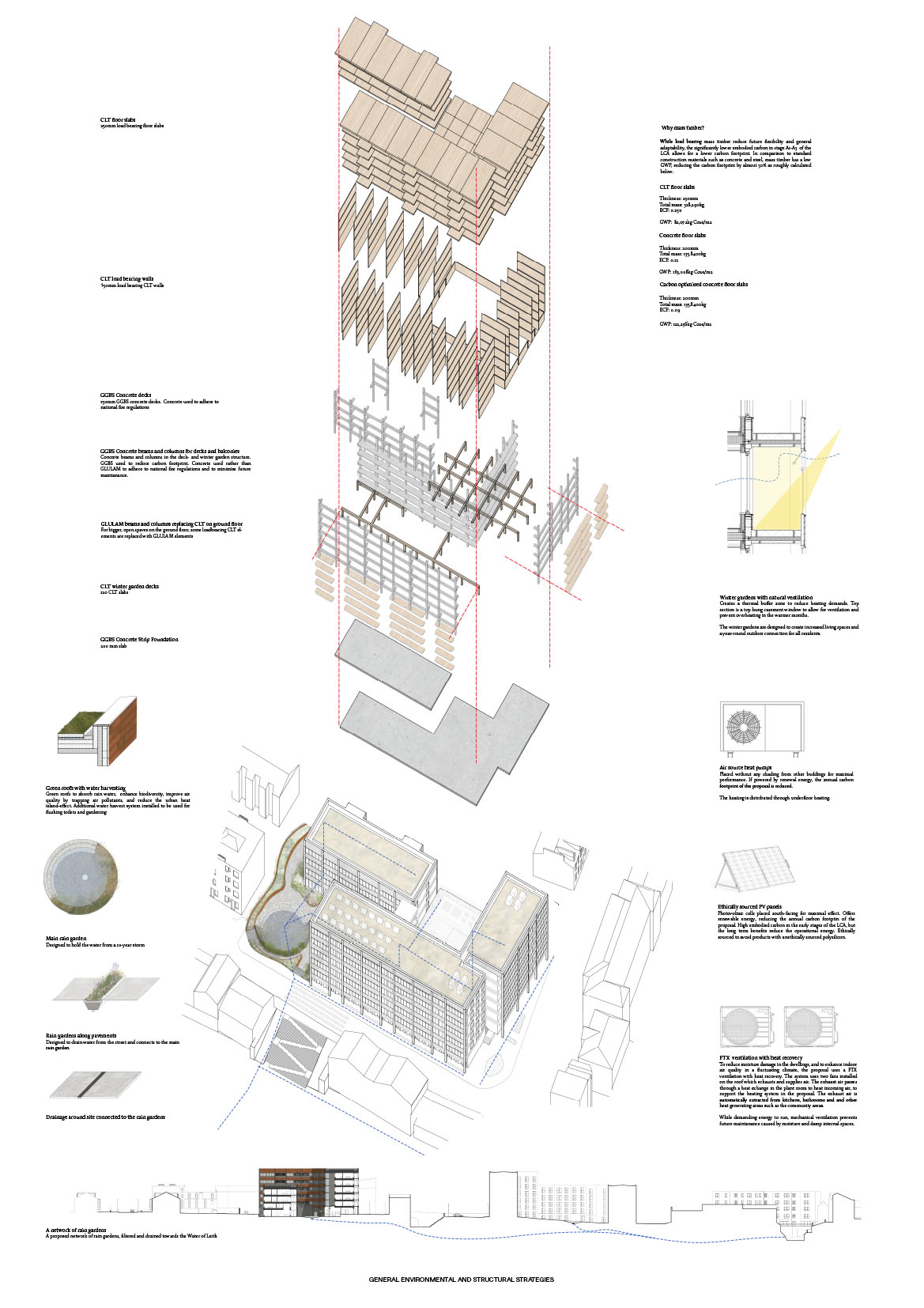
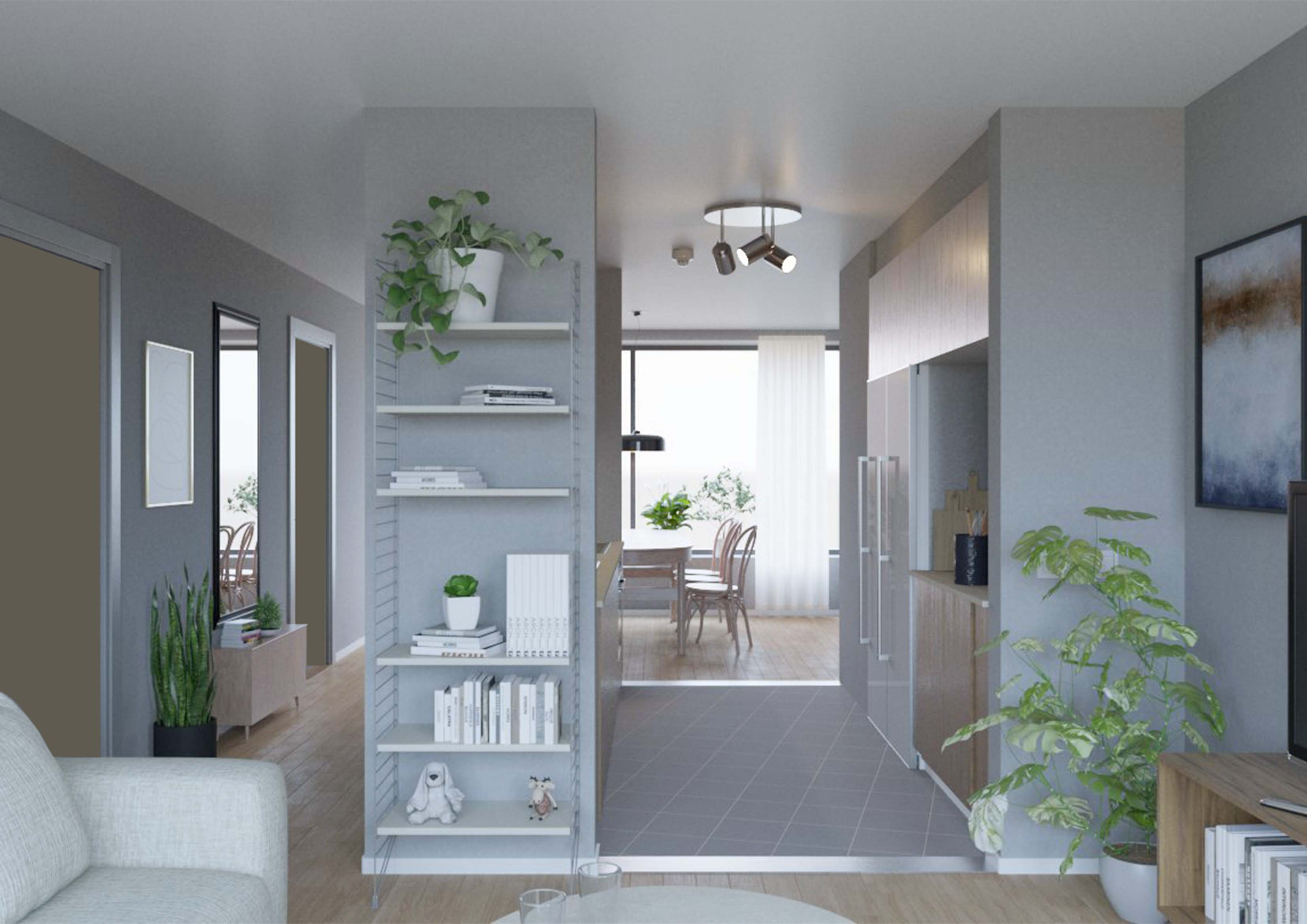
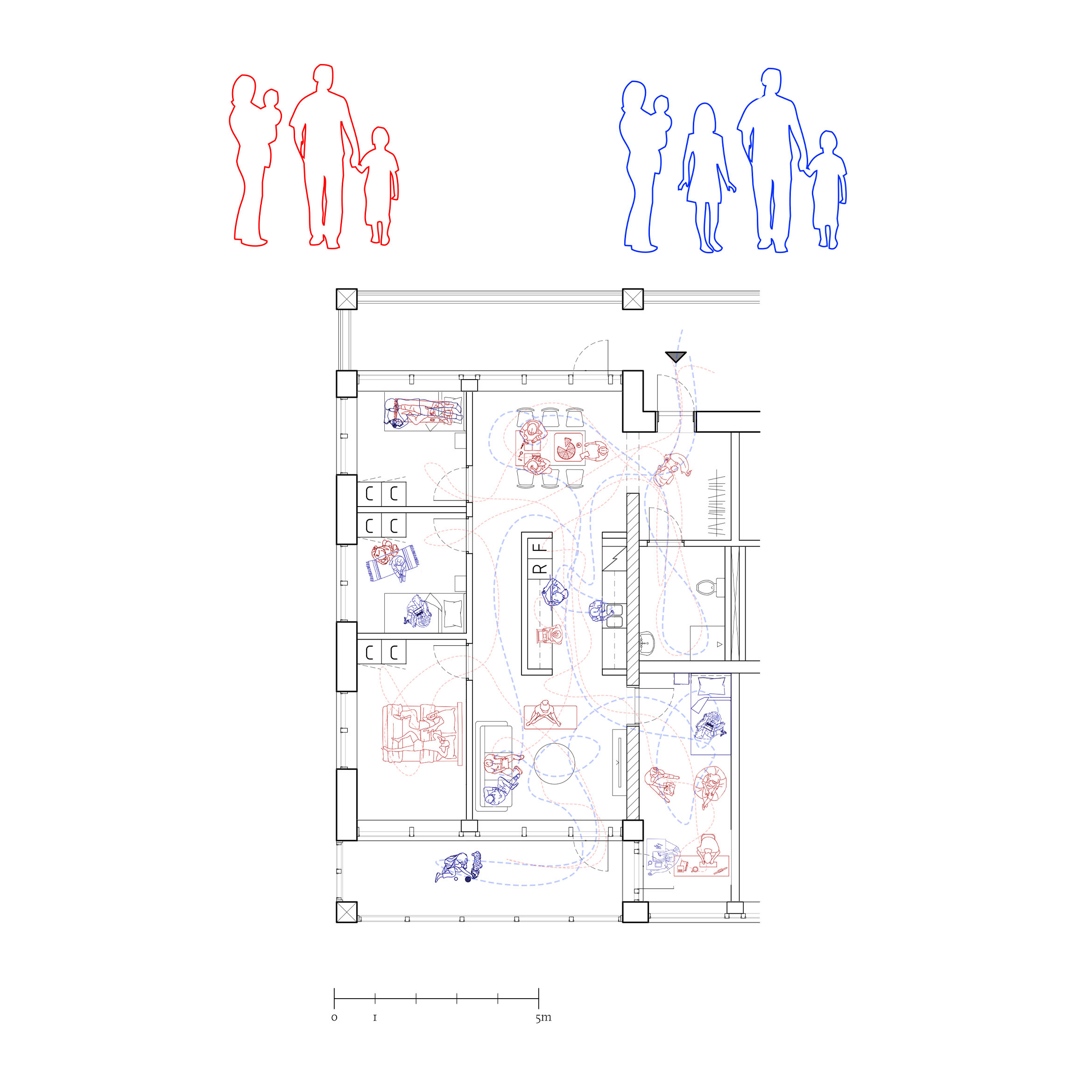
The environmental strategies, while implemented across the project in its entirety, focus on mitigating flood risk and the urban heat island effect through the development of green spaces and rain gardens. The civic aspects explore how orientation and level changes influence the sense of ownership and agency over space, as well as addressing the lack of after-school care in Scotland. Finally, the strategies for the dwellings are developed to address the waiting lists for social housing, the ‘bedroom-tax’, and how domestic space can be designed to allow for family constellations to shift.
The proposal in its entirety is not designed for a singular purpose but explicitly developed to improve life for those who call it home. Its design strategies draw from the words of Florian Beigel, where the architect designs the infrastructure and lets the residents design the inhabited layer of the dwelling; recognising how we as architects do not know what lives we are designing for. Finally, the proposal serves not only as a design project but as a suggestion for how the industry should approach critical realities.