

Edinburgh brands itself as the Festival City, yet Leith has consistently been excluded from this festive landscape. It is one of Edinburgh’s most culturally diverse neighbourhoods, with over half of its residents born outside the UK.
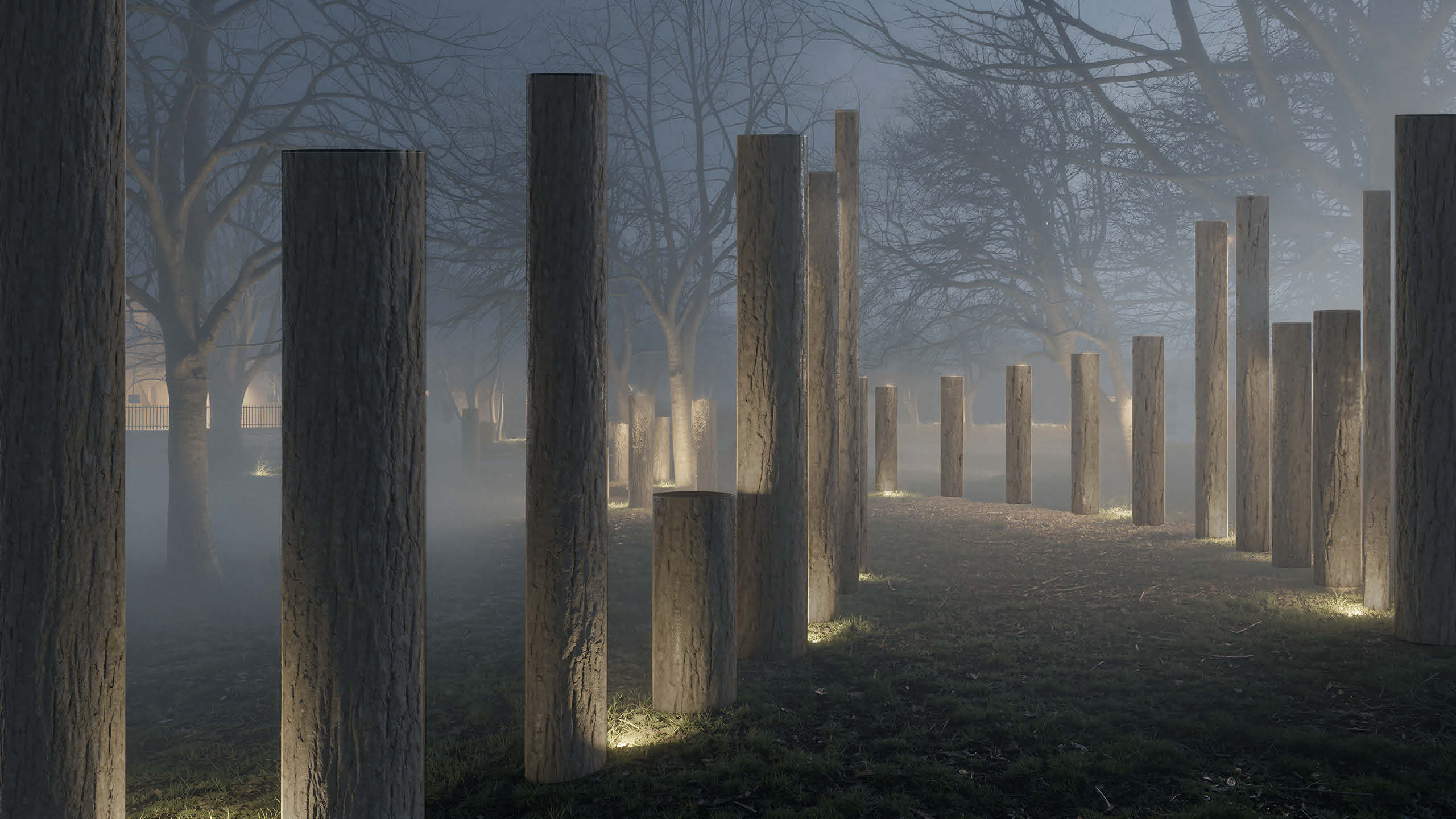
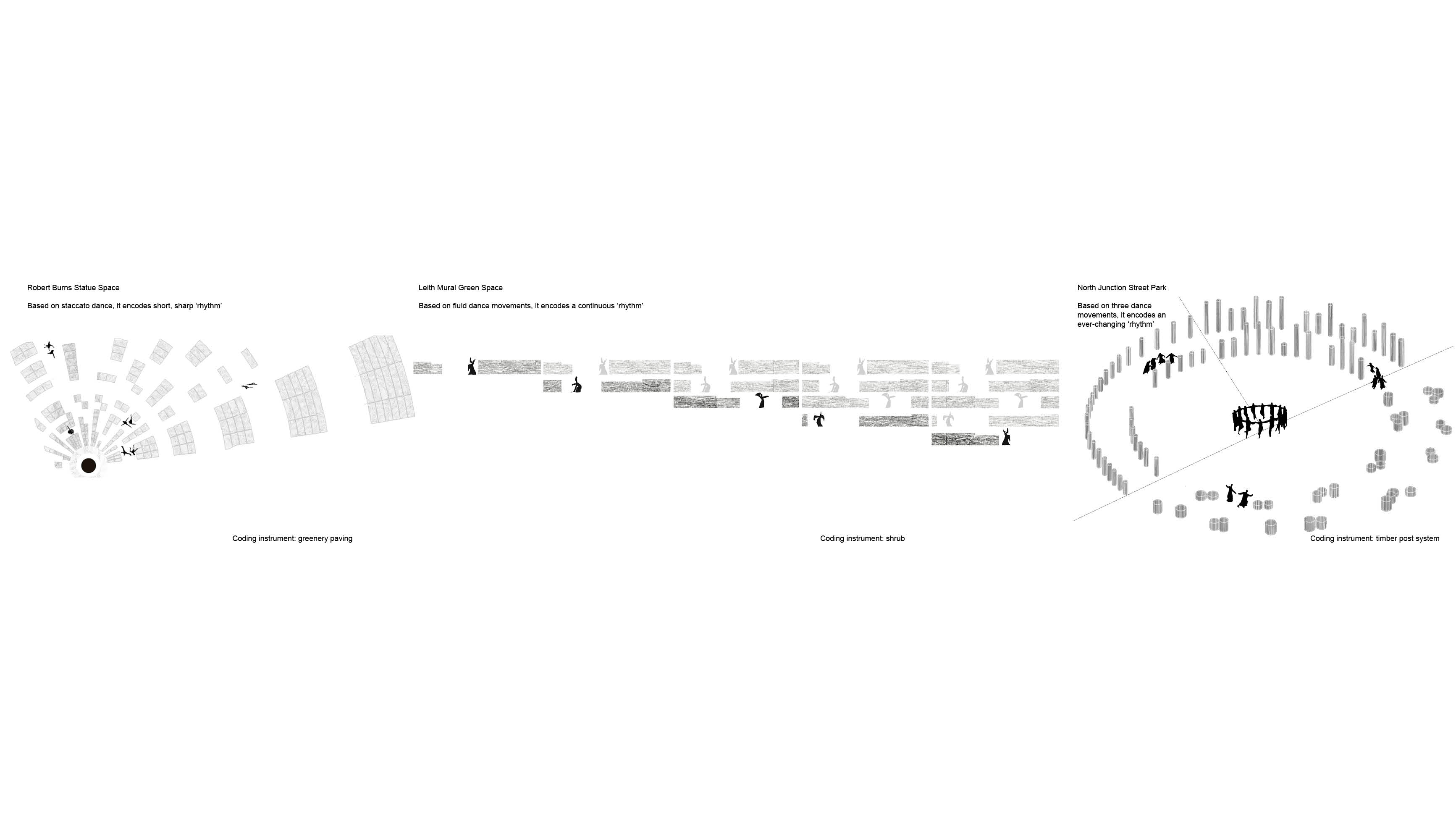
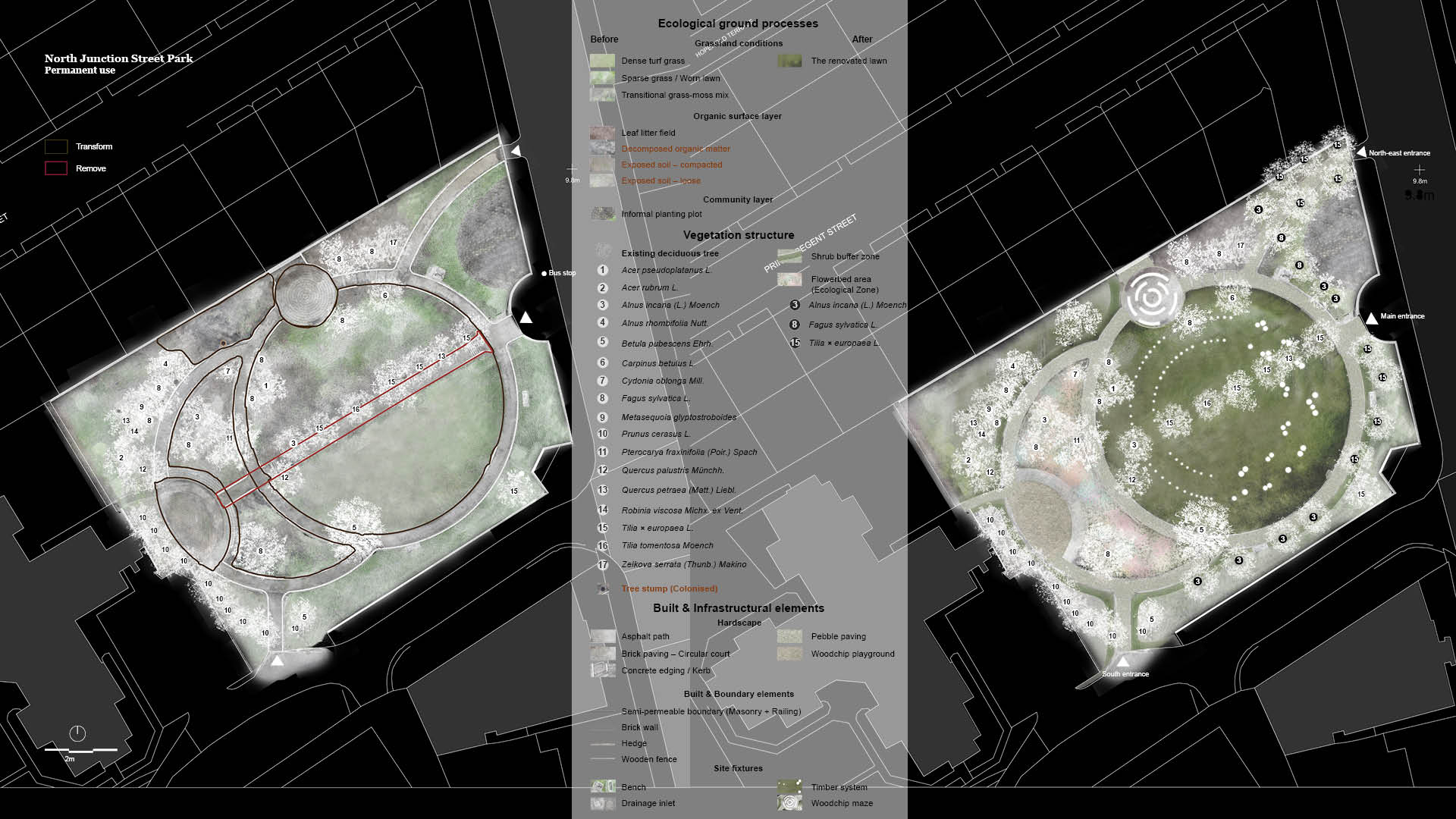
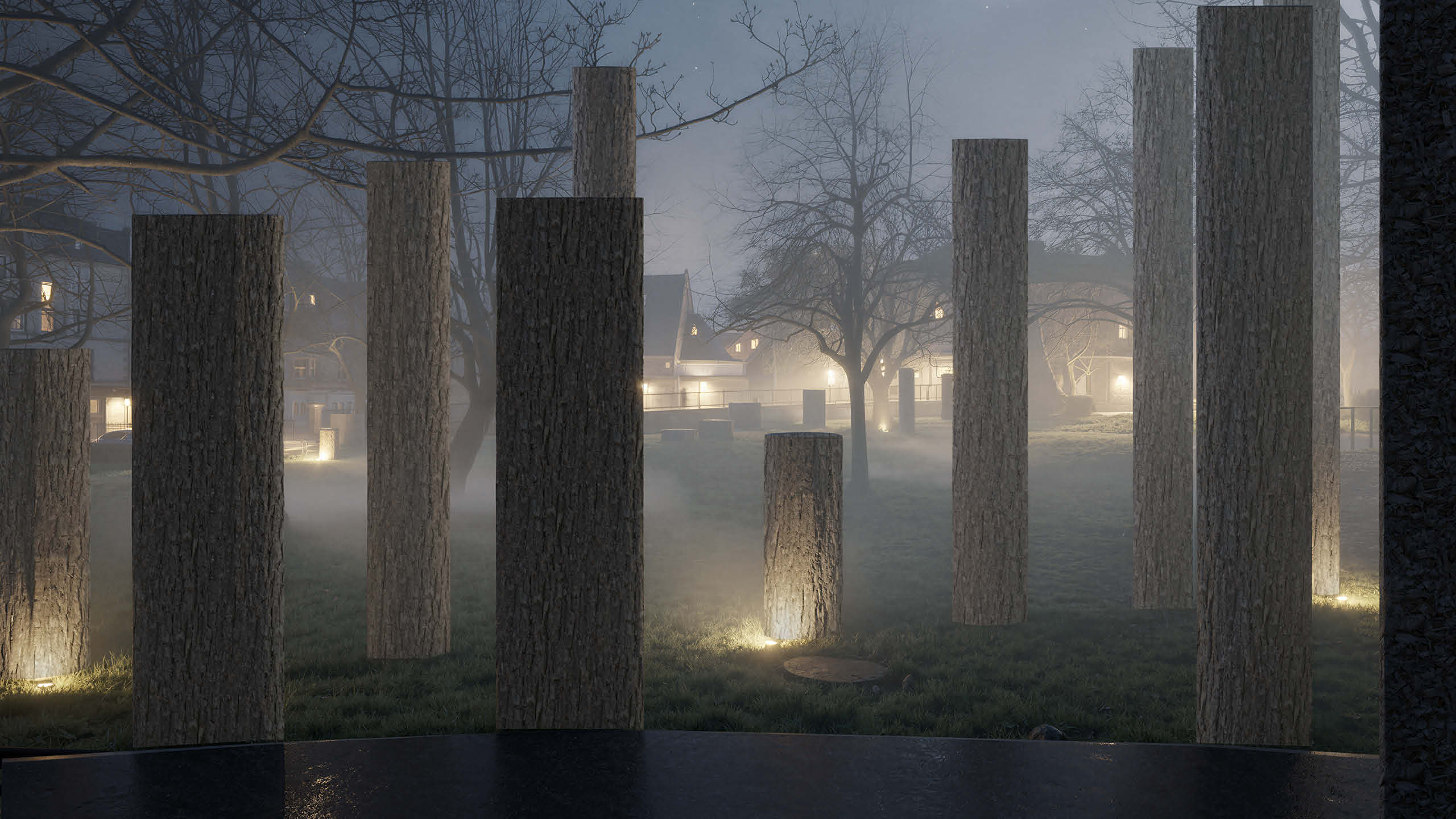
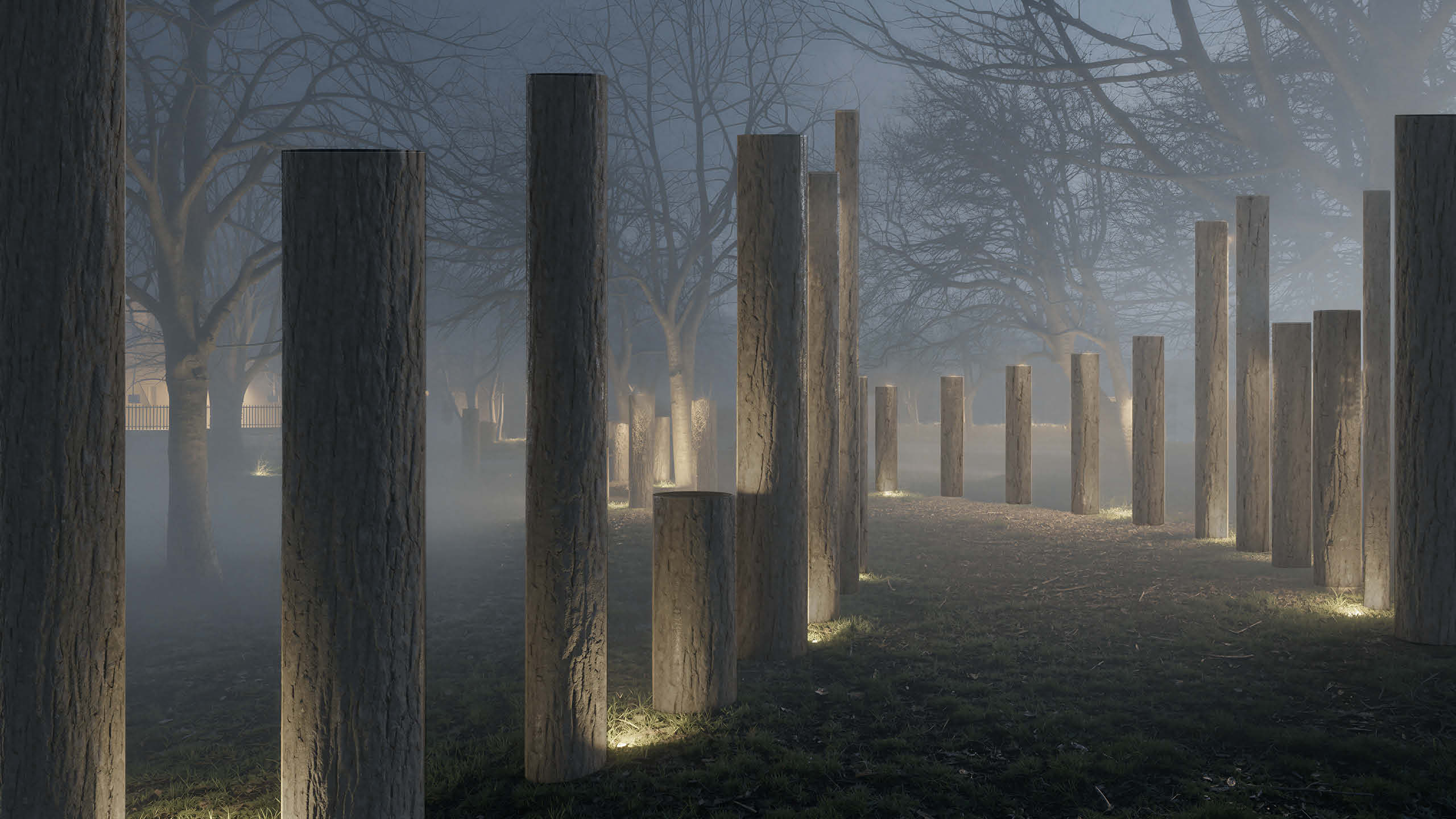
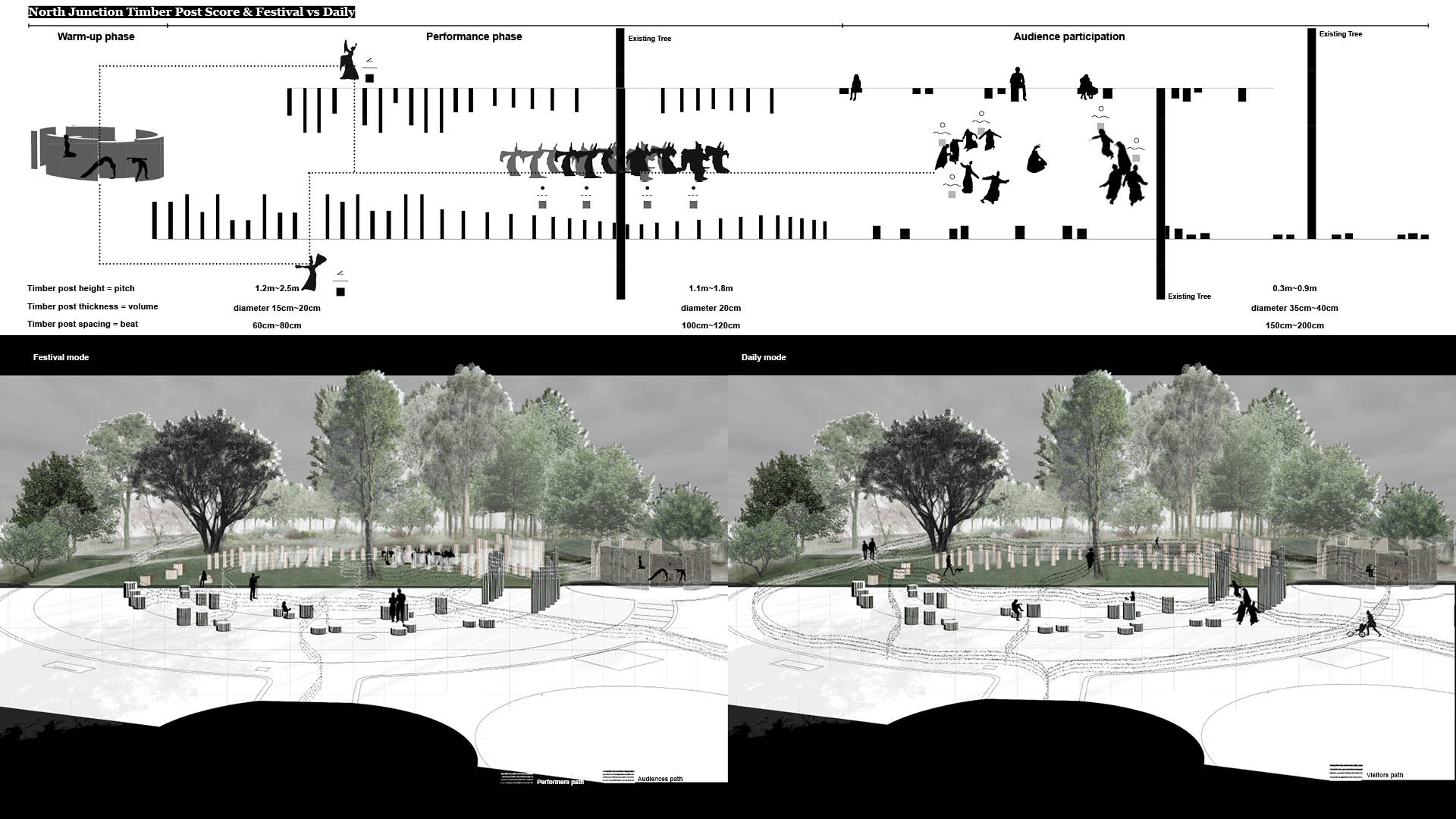
This project designs cultural infrastructure across three sites in Leith to address that gap: greenery paving at the Robert Burns Statue Space, shrub intervention at the Leith Mural Green Space, and timber post system at North Junction Street Park.
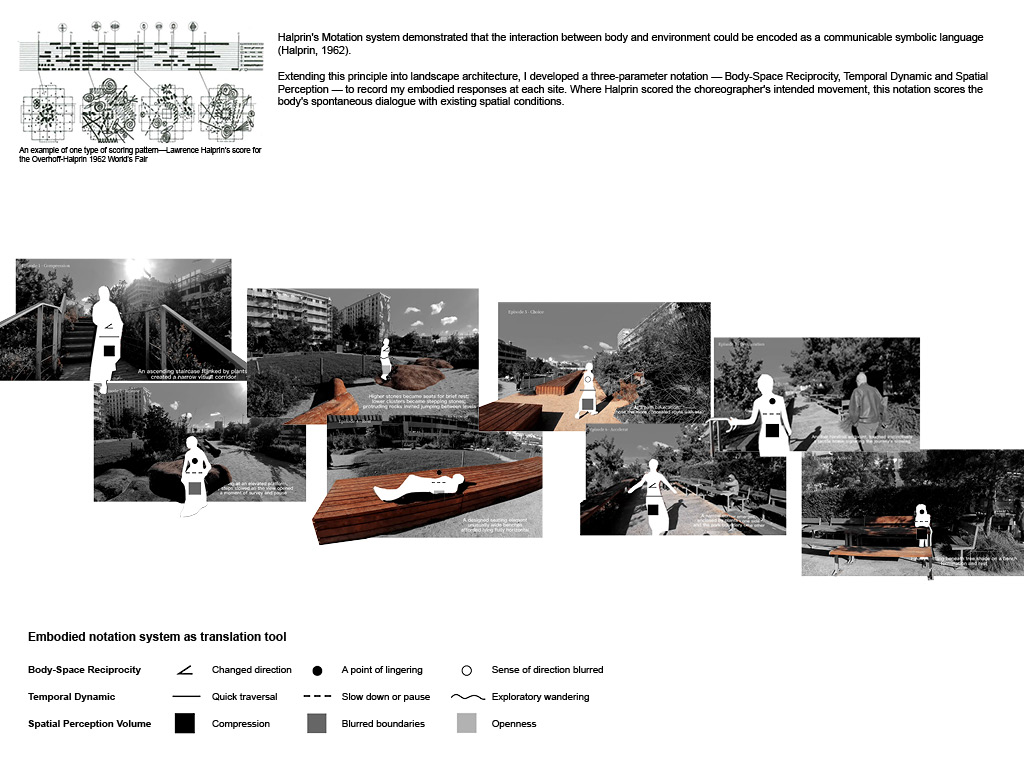
The design methodology uses embodied experience analysis as a site-reading tool. Drawing on a decade of training in Chinese classical and folk dance, I recorded my body's spontaneous spatial responses at each site and encoded them into a notation system that translates choreographic parameters — rhythm, spatial range, and formation pattern — into material design codes.
The three sites share a common spatial score but deploy different instruments: paving texture encodes two-dimensional rhythm, shrub profile encodes two-and-a-half-dimensional rhythm, and timber post elevation encodes three-dimensional rhythm. Together they form a choreographic crescendo: from passive witnessing to active participation, from temporary activation to permanent infrastructure.
This video documents the earliest field test of the project's embodied methodology, conducted in Paris prior to its application in Edinburgh's Leith community. Using a body trained in Chinese classical and folk dance, I recorded spontaneous physical responses to a series of urban spaces — compression and release at thresholds, centripetal movement in confined areas, deceleration near vertical surfaces, and exploratory wandering in open plazas. These instinctive reactions became the raw data from which I later developed a three-parameter notation system (Spatial Volume, Temporal Dynamic, Body-Space Reciprocity) capable of translating bodily experience into spatial design parameters. The Paris fieldwork established a critical methodological principle that carried through the entire project: rather than observing space from outside, the body enters it, responds to it, and generates knowledge that conventional site analysis cannot capture.






https://issuu.com/t/jinyu-yan/jinyu