


Xindi Su
Vaulting the Cordiner's Edge: Crafting Lost Grounds

Follow:

Awards
Skills & Experience
- June 2026 - August 2026: Skidmore, Owings and Merrill, City Design Practice Intern (Urban Planning)
- January 2026: Skidmore, Owings and Merrill, Winter Shadowship, City Design Practice (Urban Planning)
- September 2025 - May 2026: Edinburgh University Architecture Society, President
- August 2024 - August 2025: Lorn Macneal Architects, Part 1 Architectural Assistant
- July - August 2024: CAUKIN Studio, Part 1 Architectural Assistant
Bio
As Alison and Peter Smithson once said, “We see architecture as a direct result of a way of life”, and for me, this remains the most authentic definition of architecture, where a design response holds an inherent ability to shape, drive change and facilitate society, by addressing the user, context and the environment. My personal philosophy is representative of how the temporal dimension of the city influences the contemporary, where drawings speak from the urban scale down to the human scale, simultaneously transitioning from the holistic to the detail, yet derived from an overarching idea. This final project facilitates mediation between Edinburgh’s suppressed and forgotten artisanal heritage of the past whilst stimulating new progression adapted for the present, responding to both the poet and the pragmatist, and its story best defines me as an architect, where architecture truly is shaped by life, just as much as it shapes the ways we each live.
Project Description
Vaulting the Cordiner’s Edge: Crafting Lost Grounds
Lasts, Trees, Cabinets and Counters
cordiner (noun): an archaic term for a shoemaker
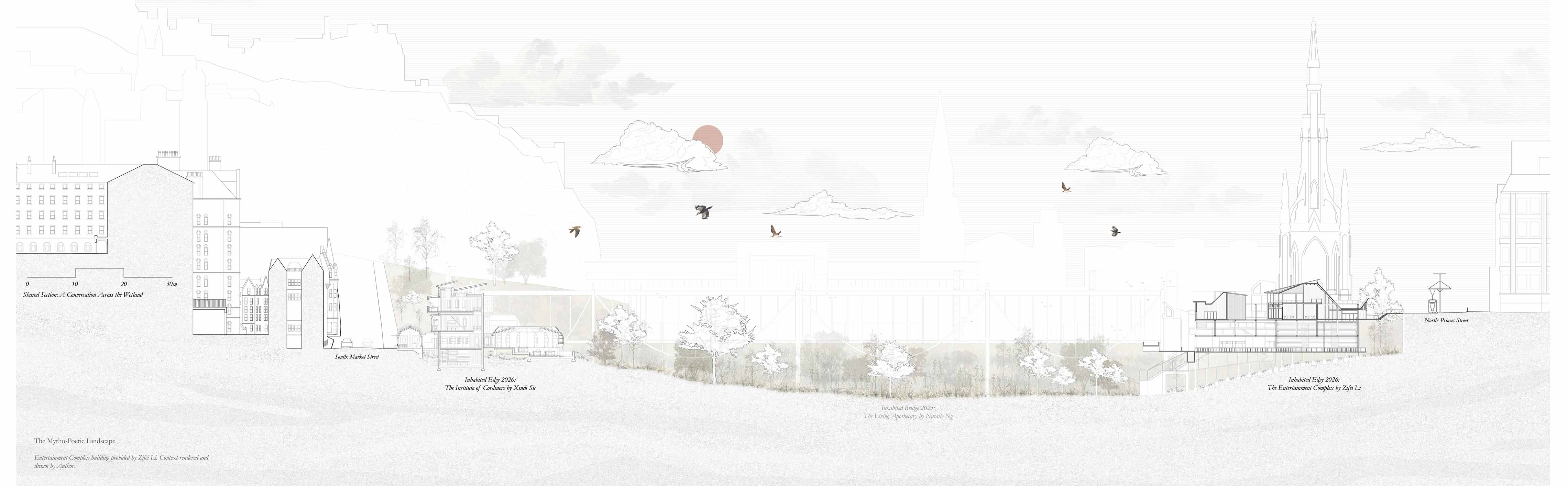
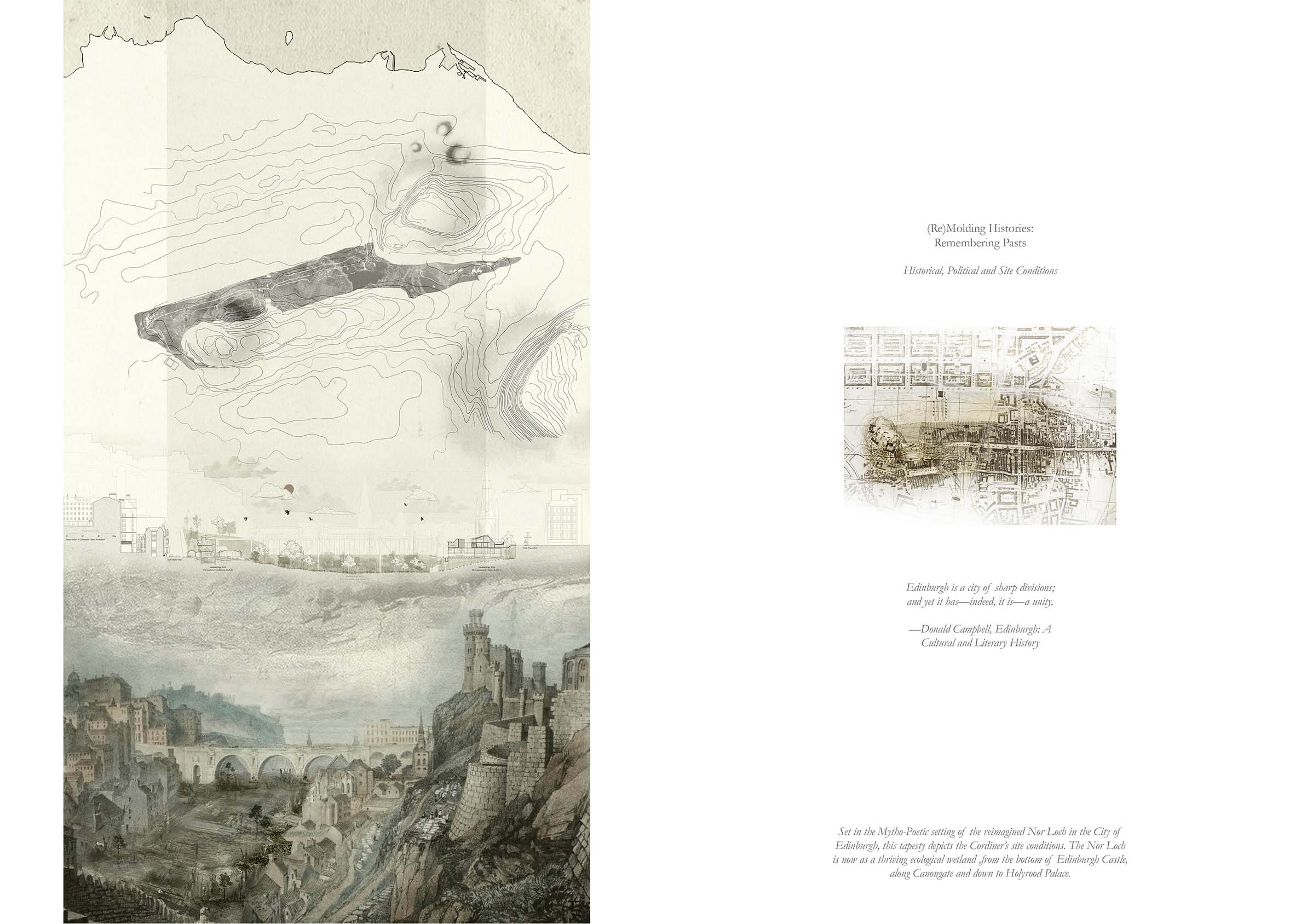
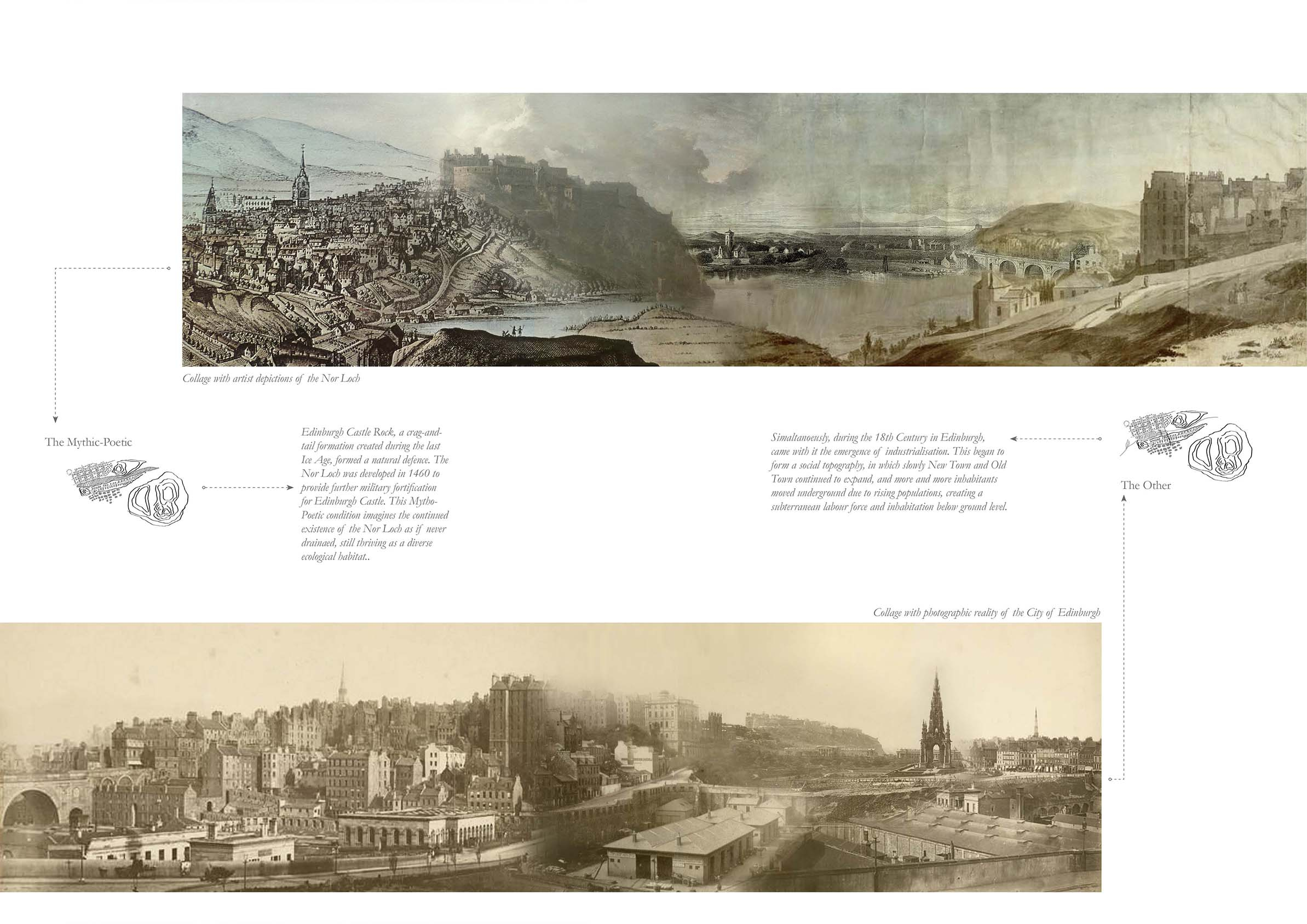
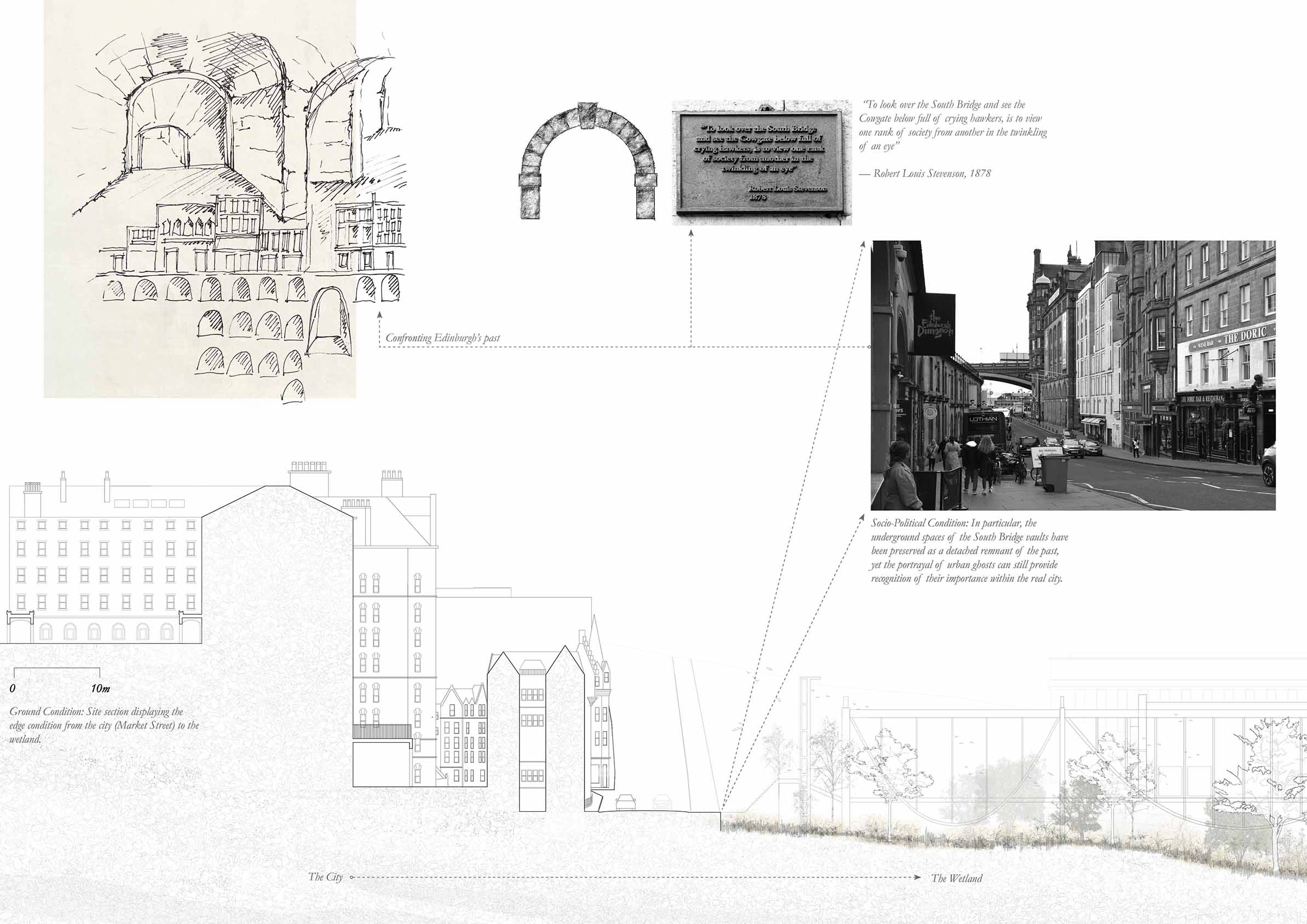
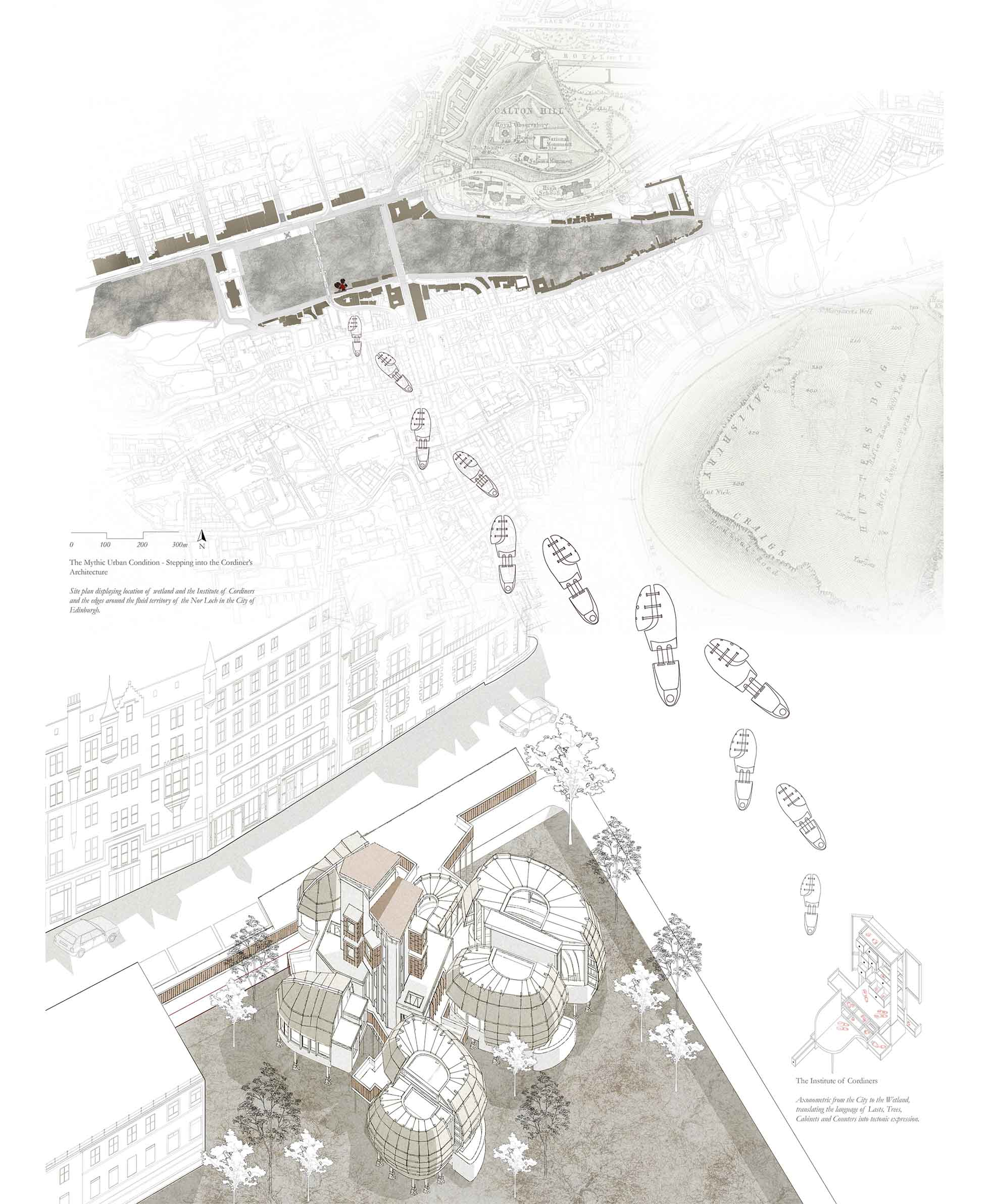
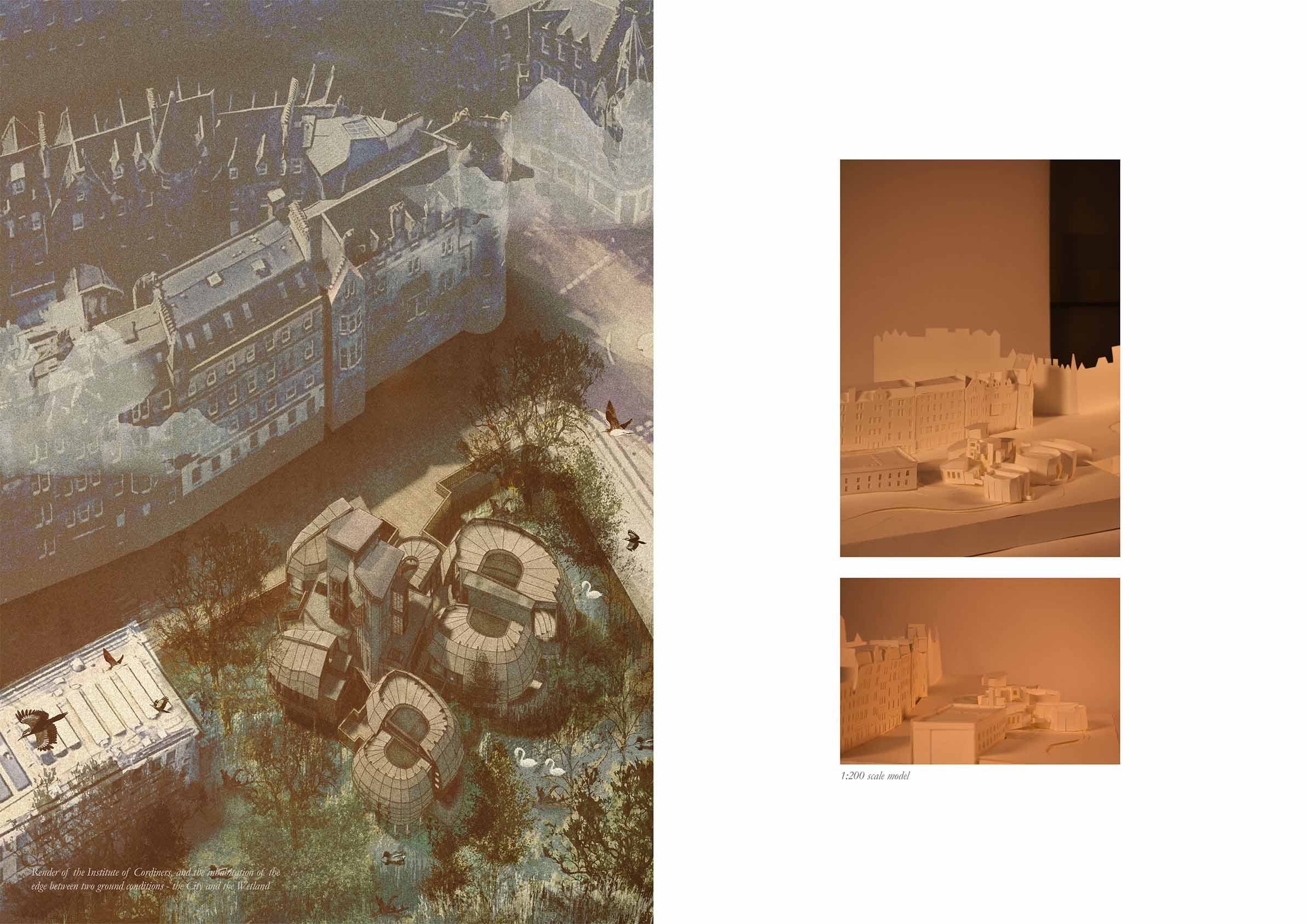
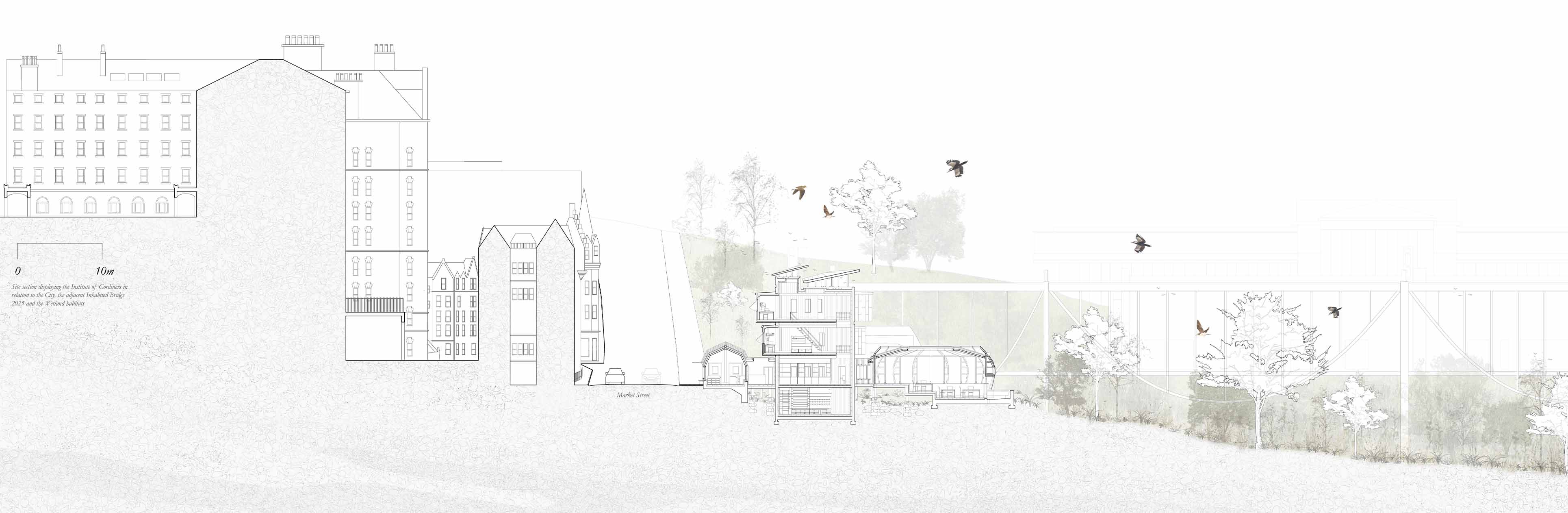
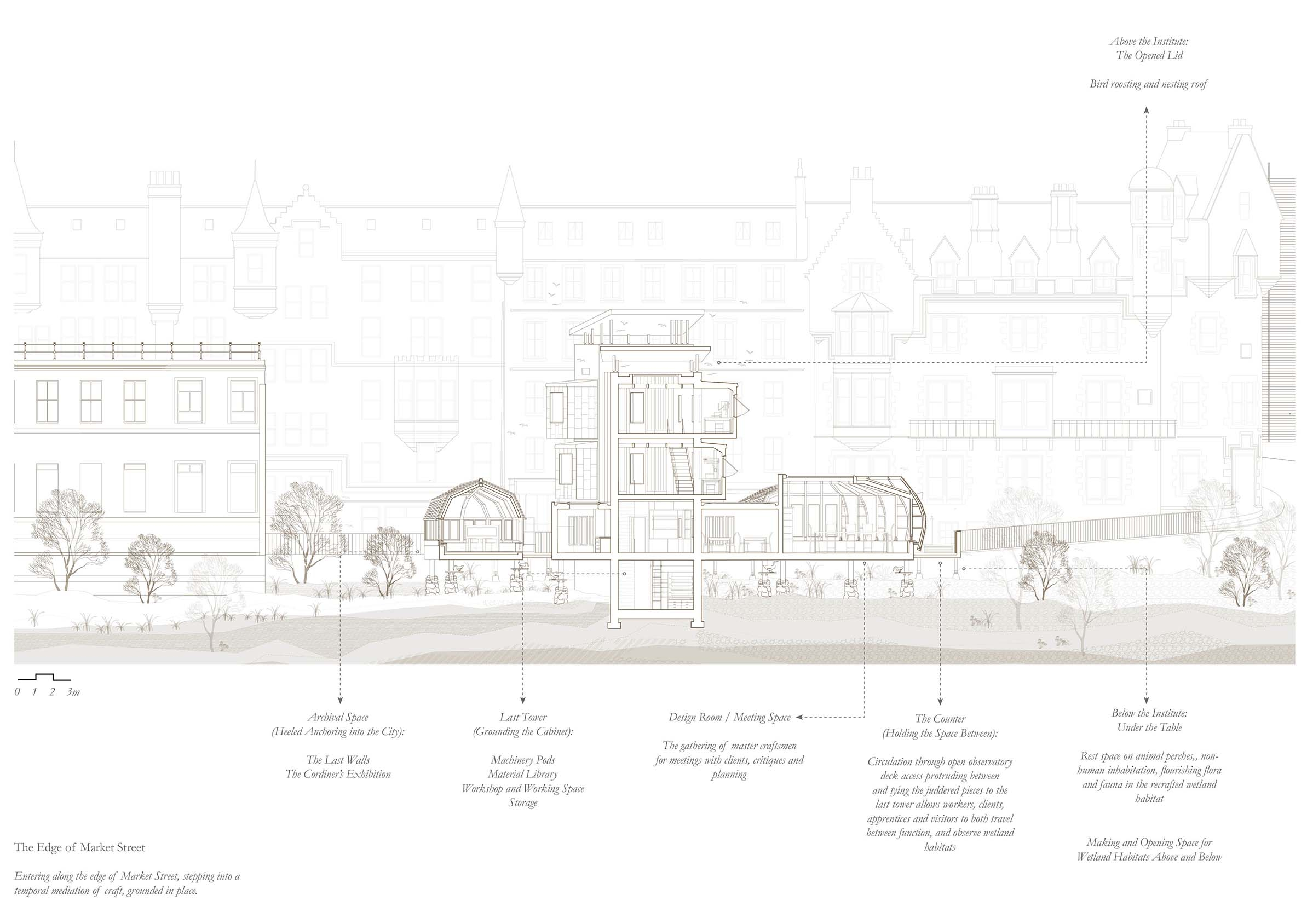
Set in a Mytho-Poetic condition within the city of Edinburgh, the Nor Loch thrives once more, from the bottom of Castle Hill down to Canongate. Situated along the edges of this thriving wetland territory, is the Institute of Cordiners. The Incorporation of Cordiners, once a thriving and powerful guild in Edinburgh, and now a craft suppressed and forgotten, is thus caught in a temporal mediation; a return of traditional artisanal heritage, blended with productive mechanisms for the demands in an age of mass, restoring shoemaking to contemporary status, an edge of two places.
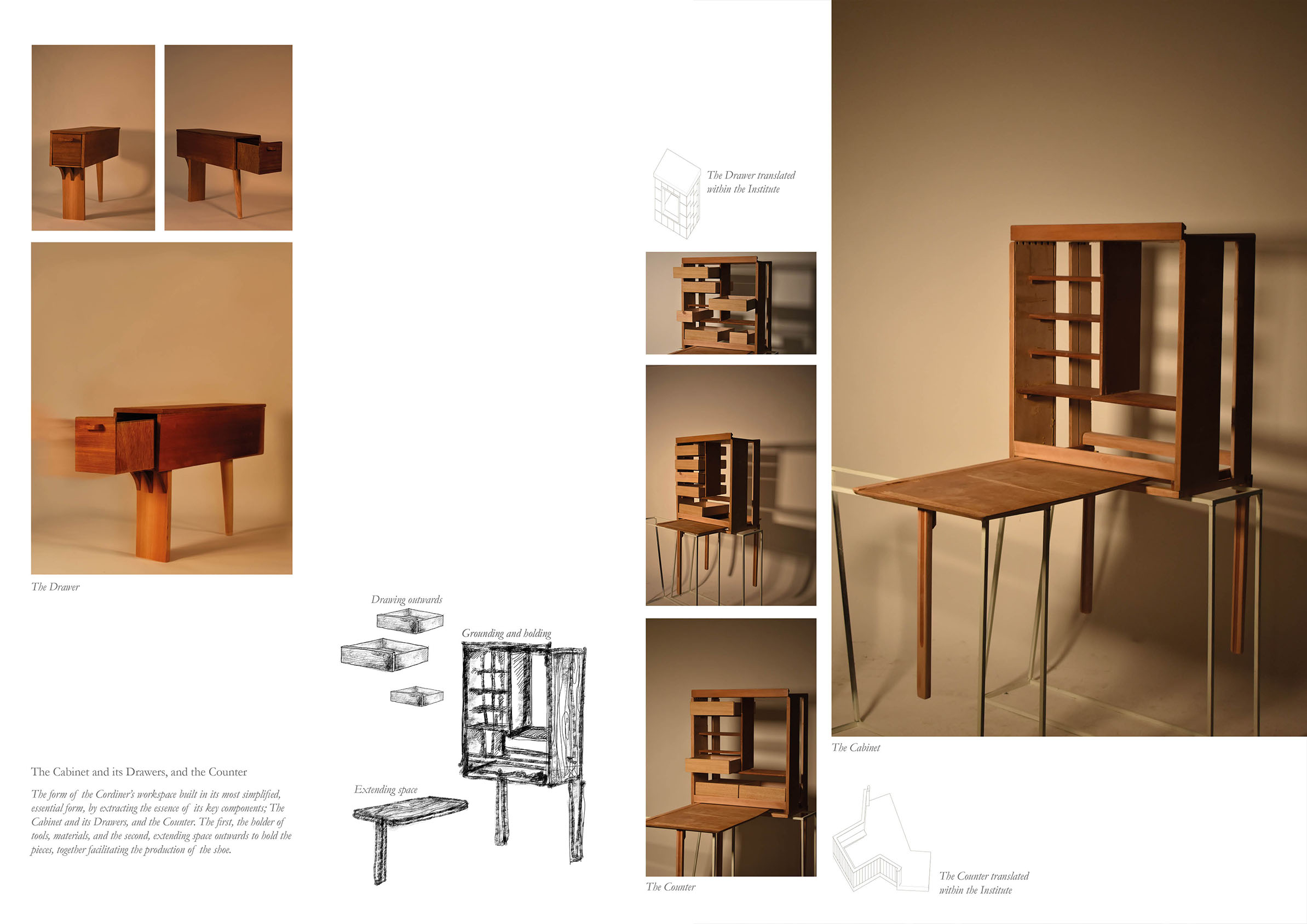
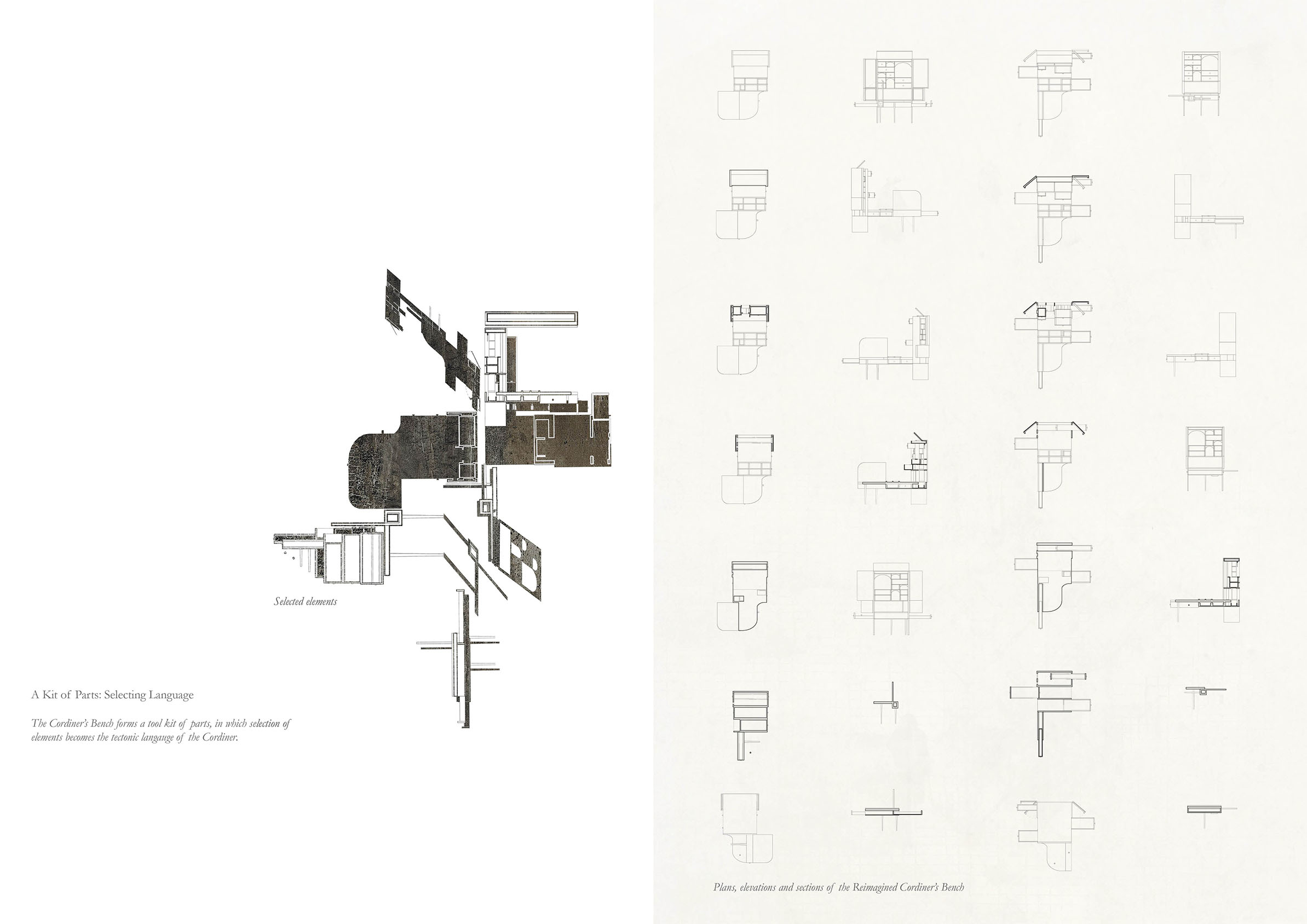
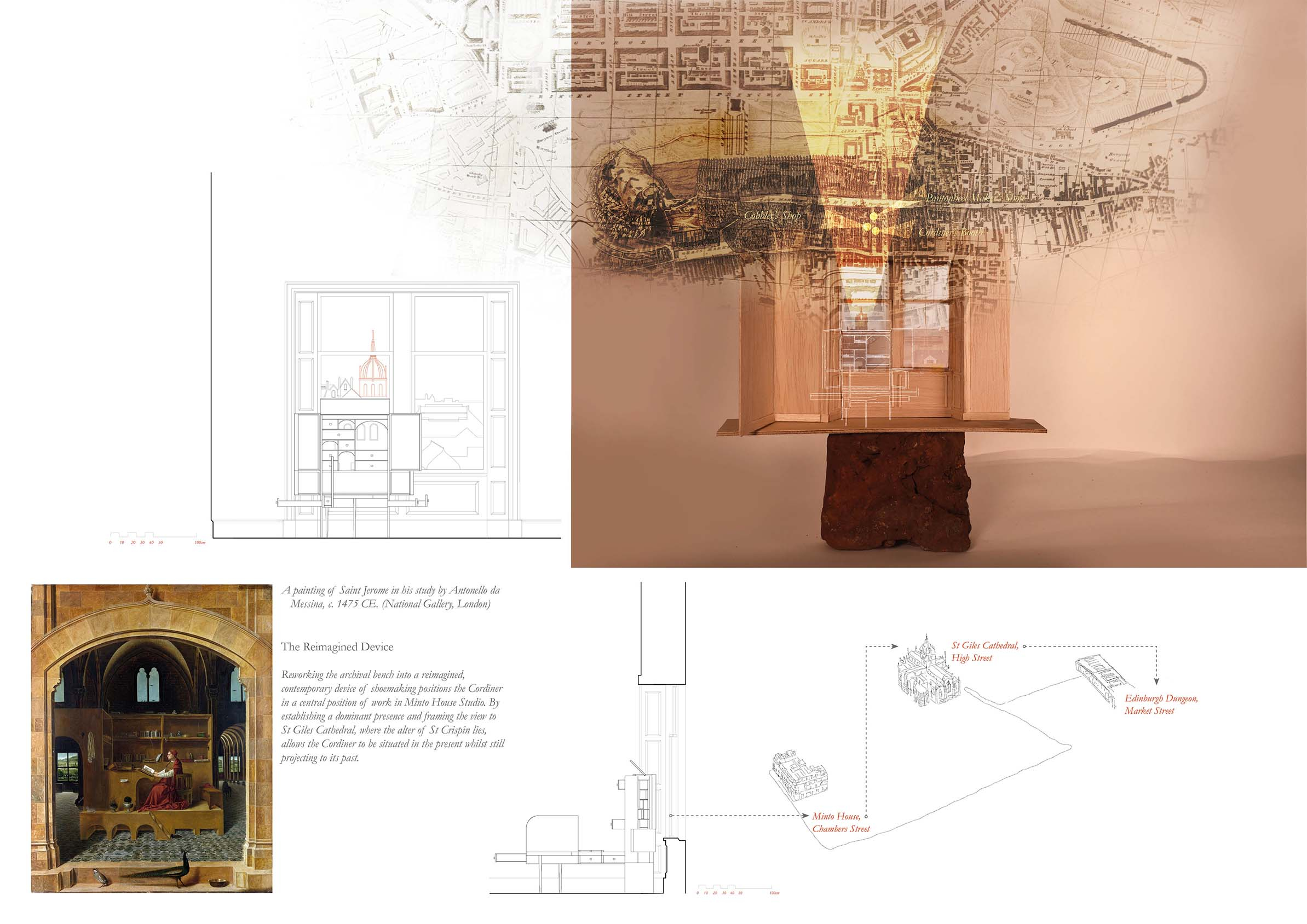
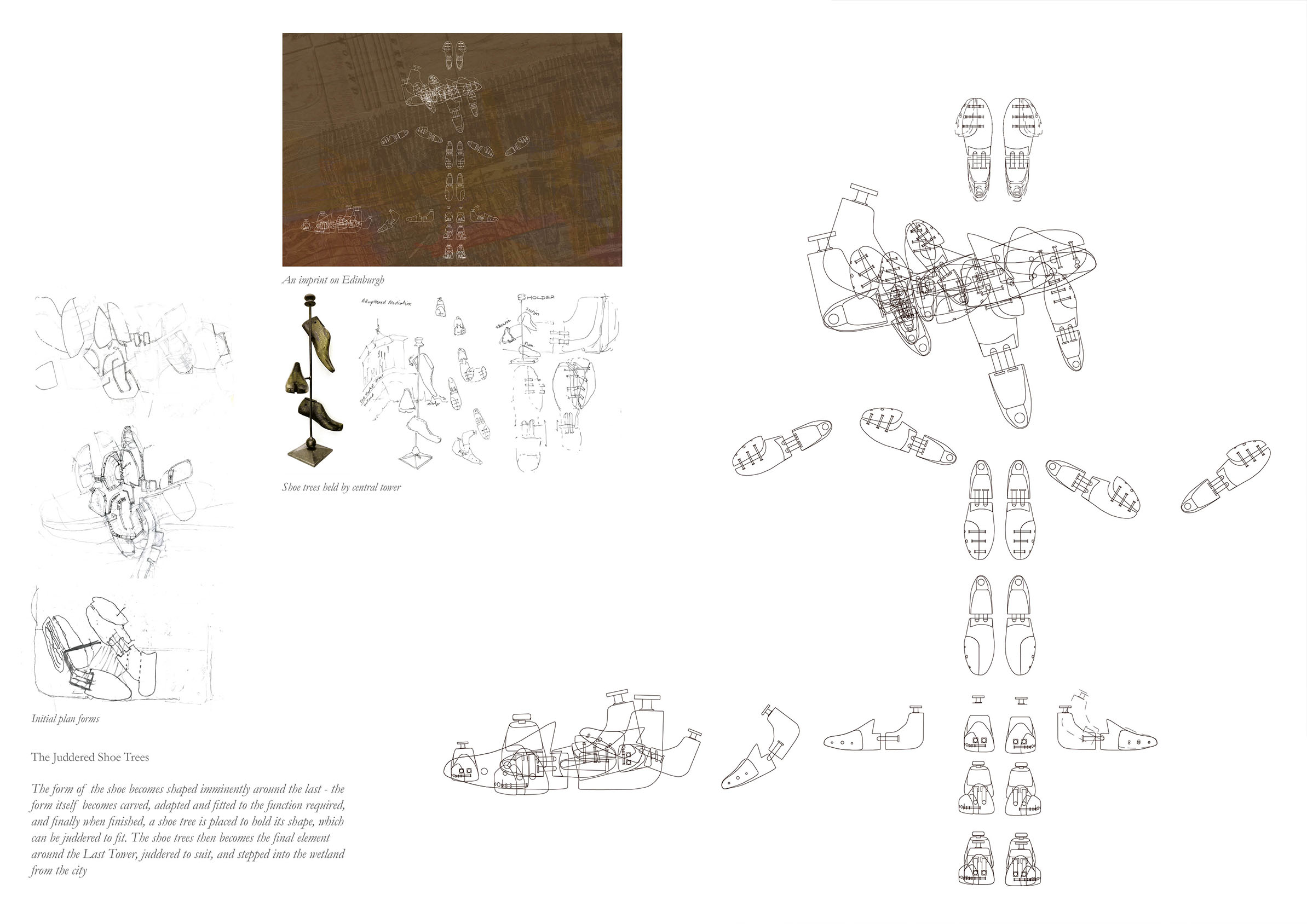
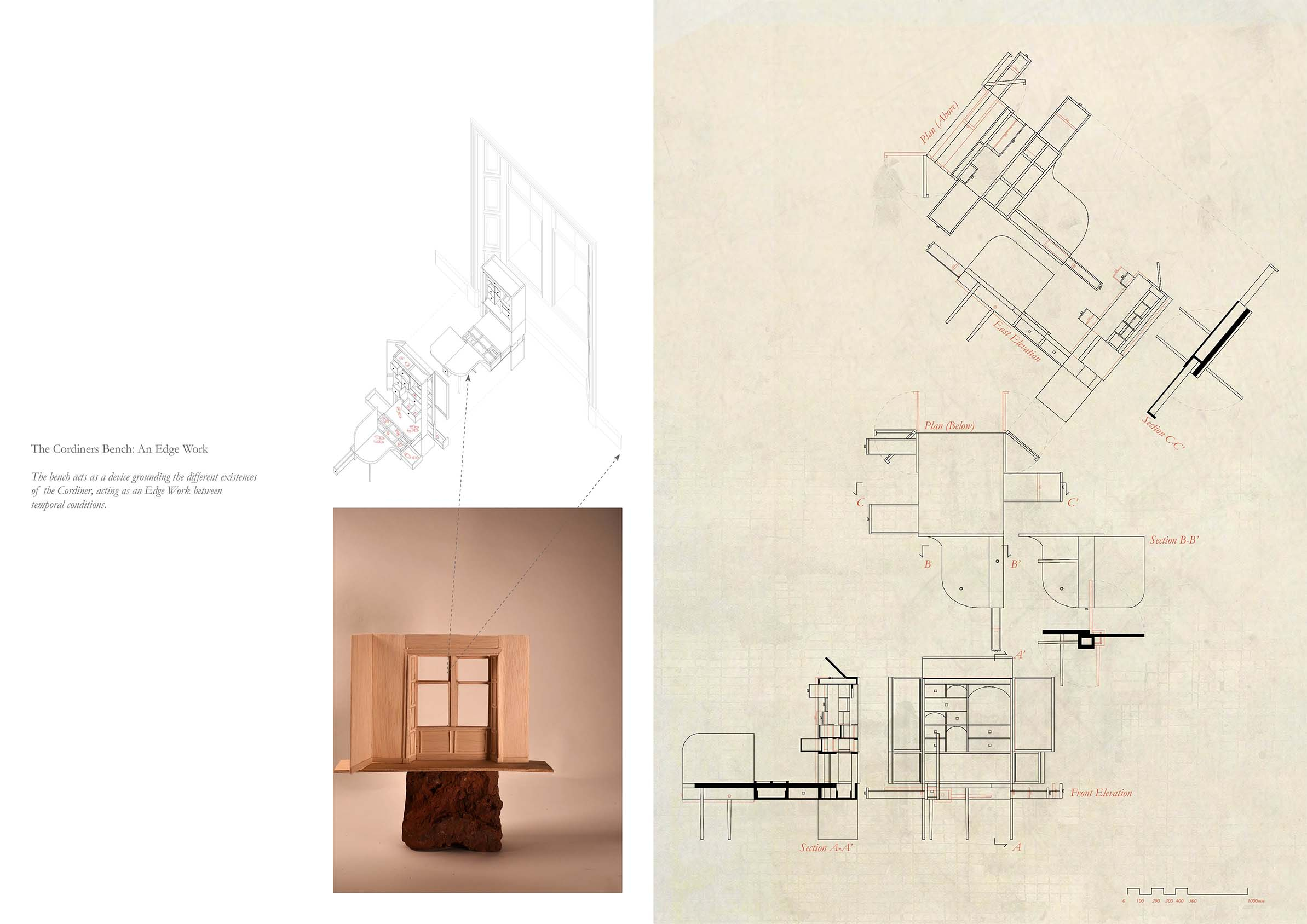
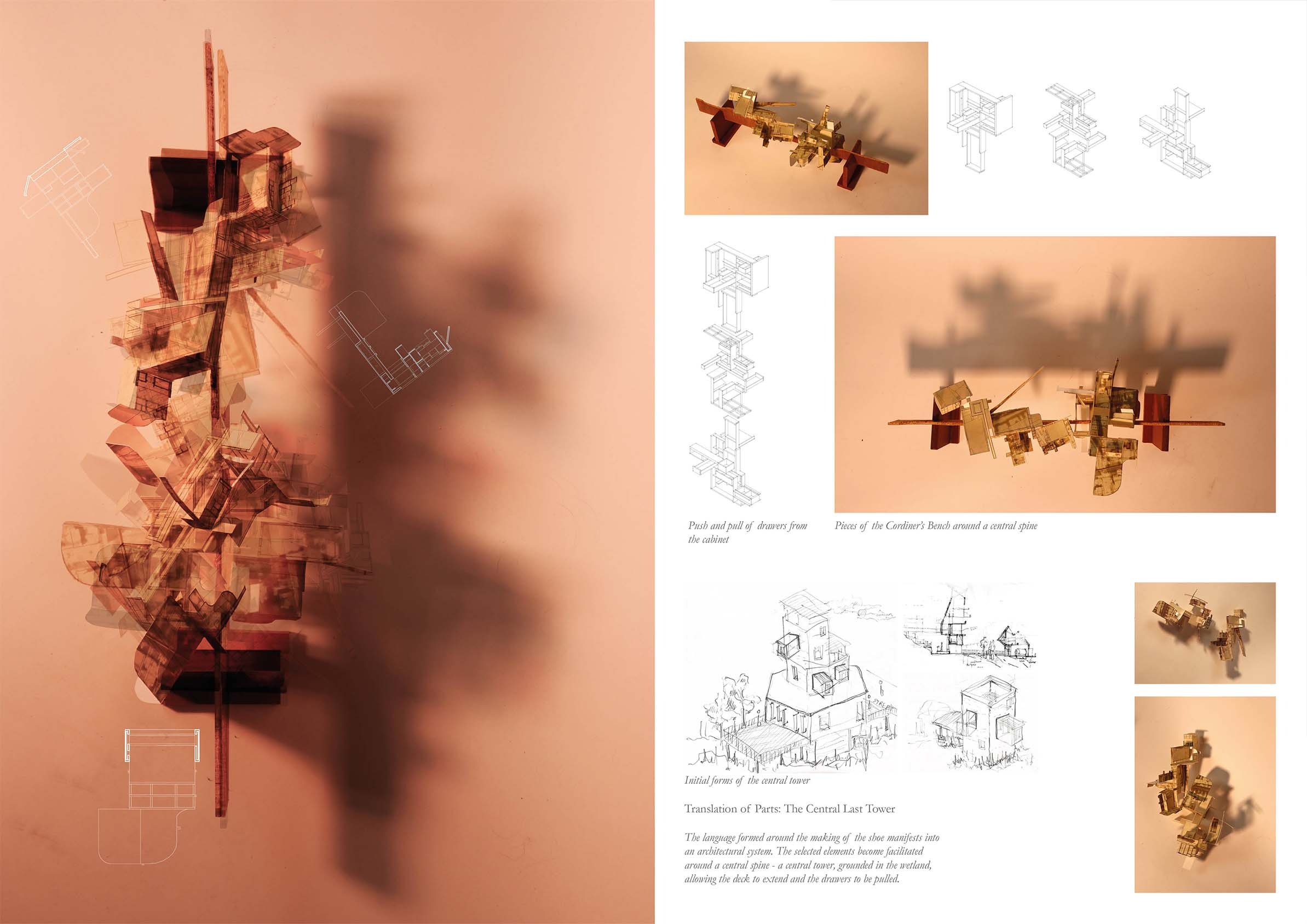
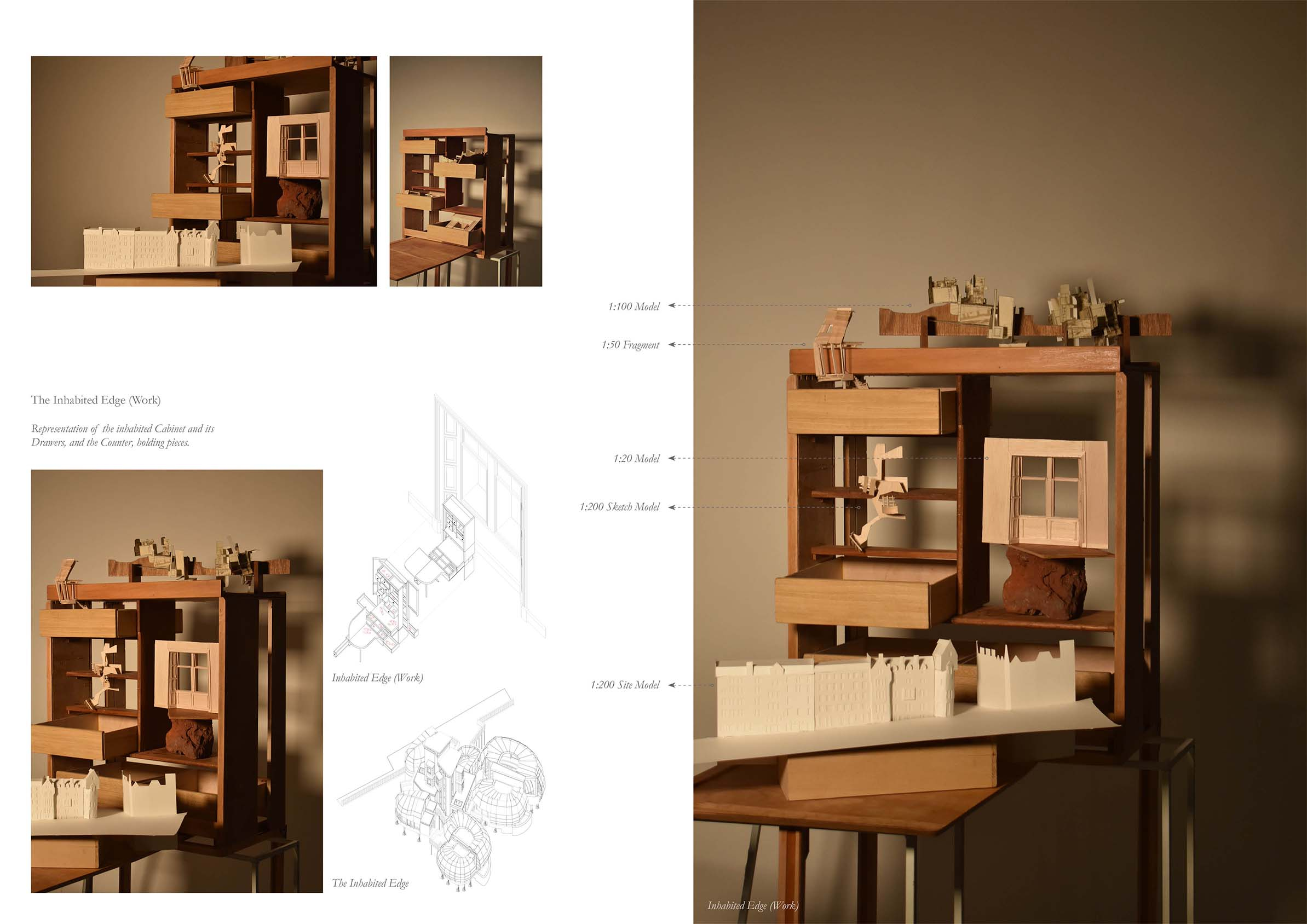
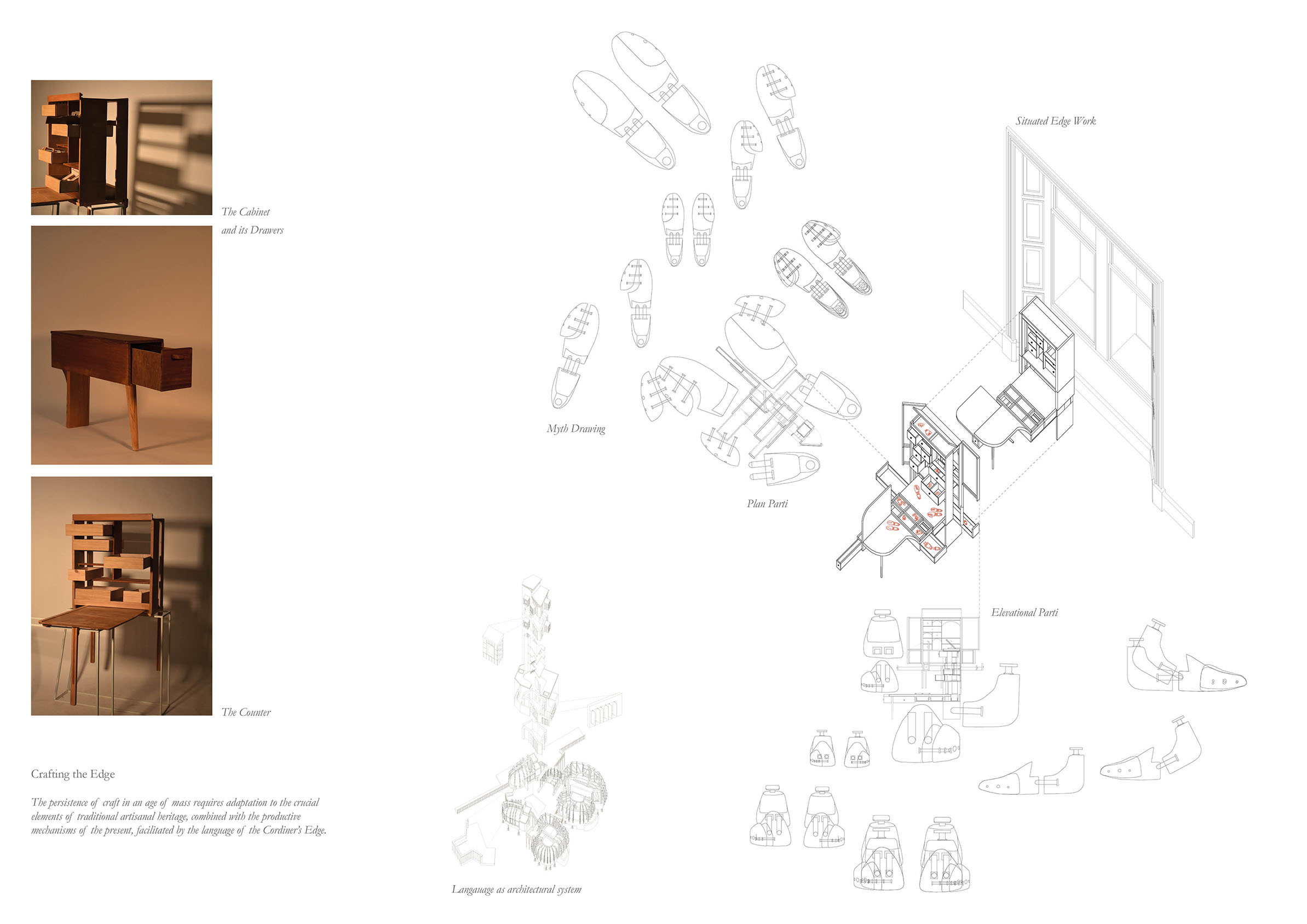
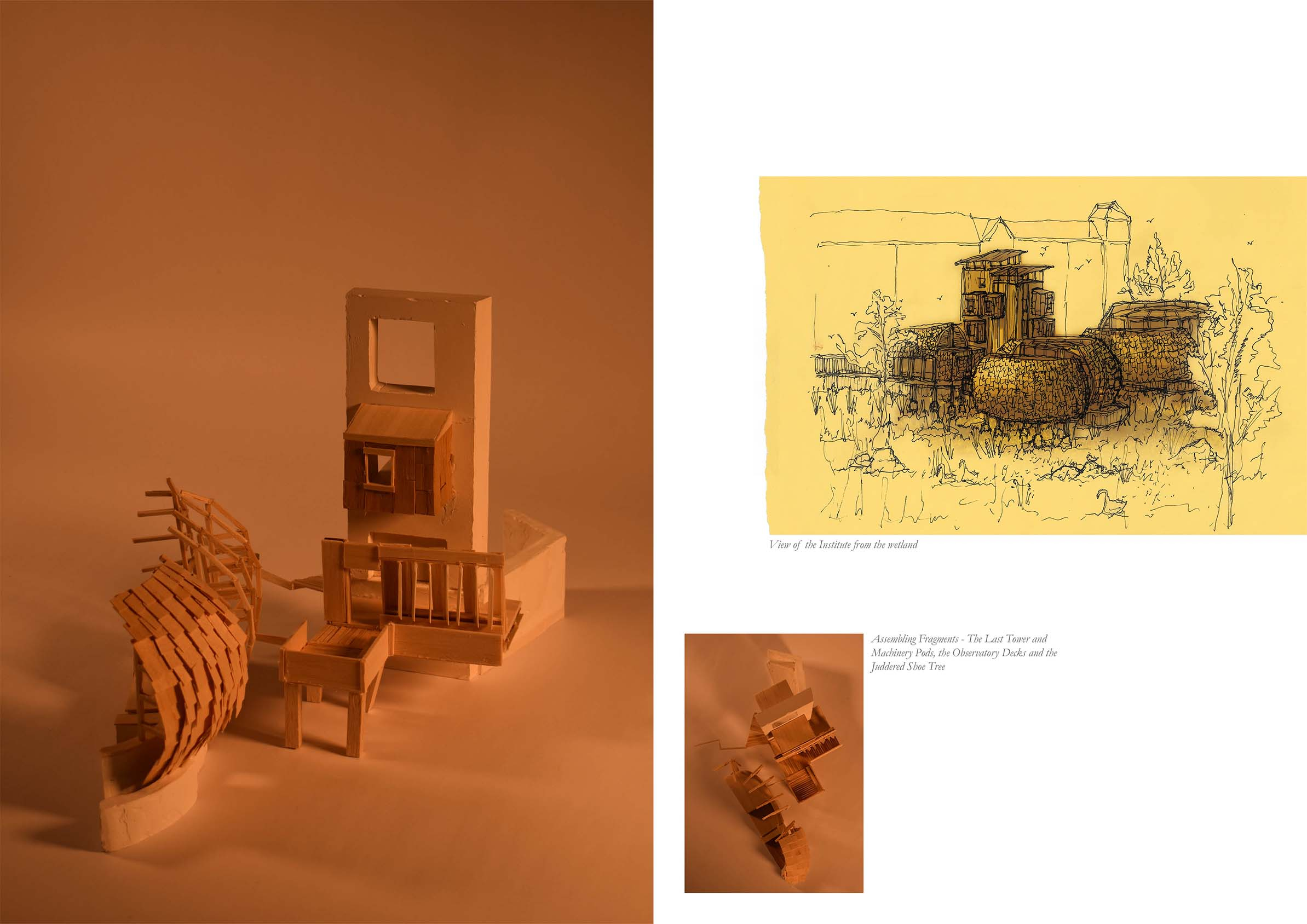
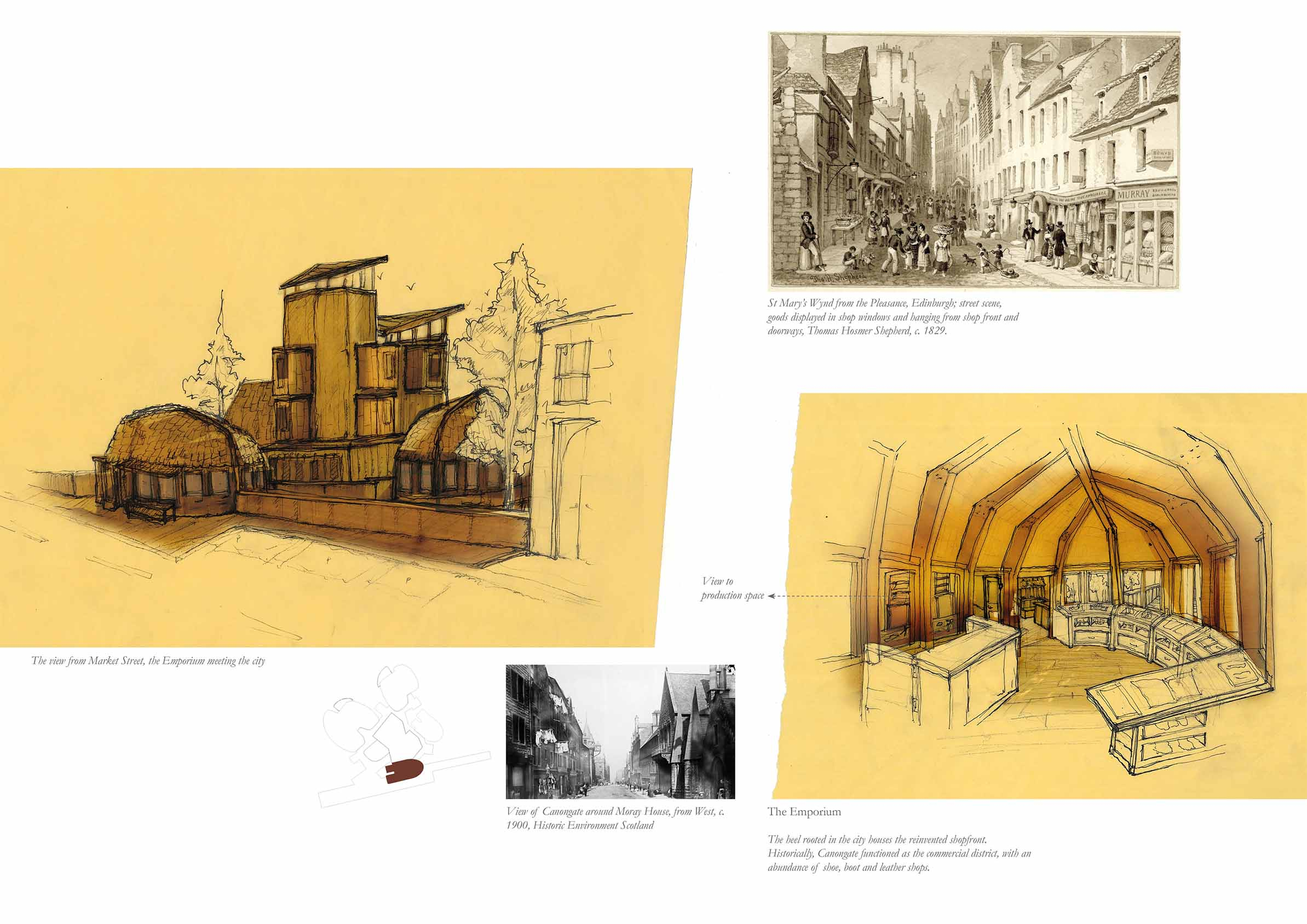
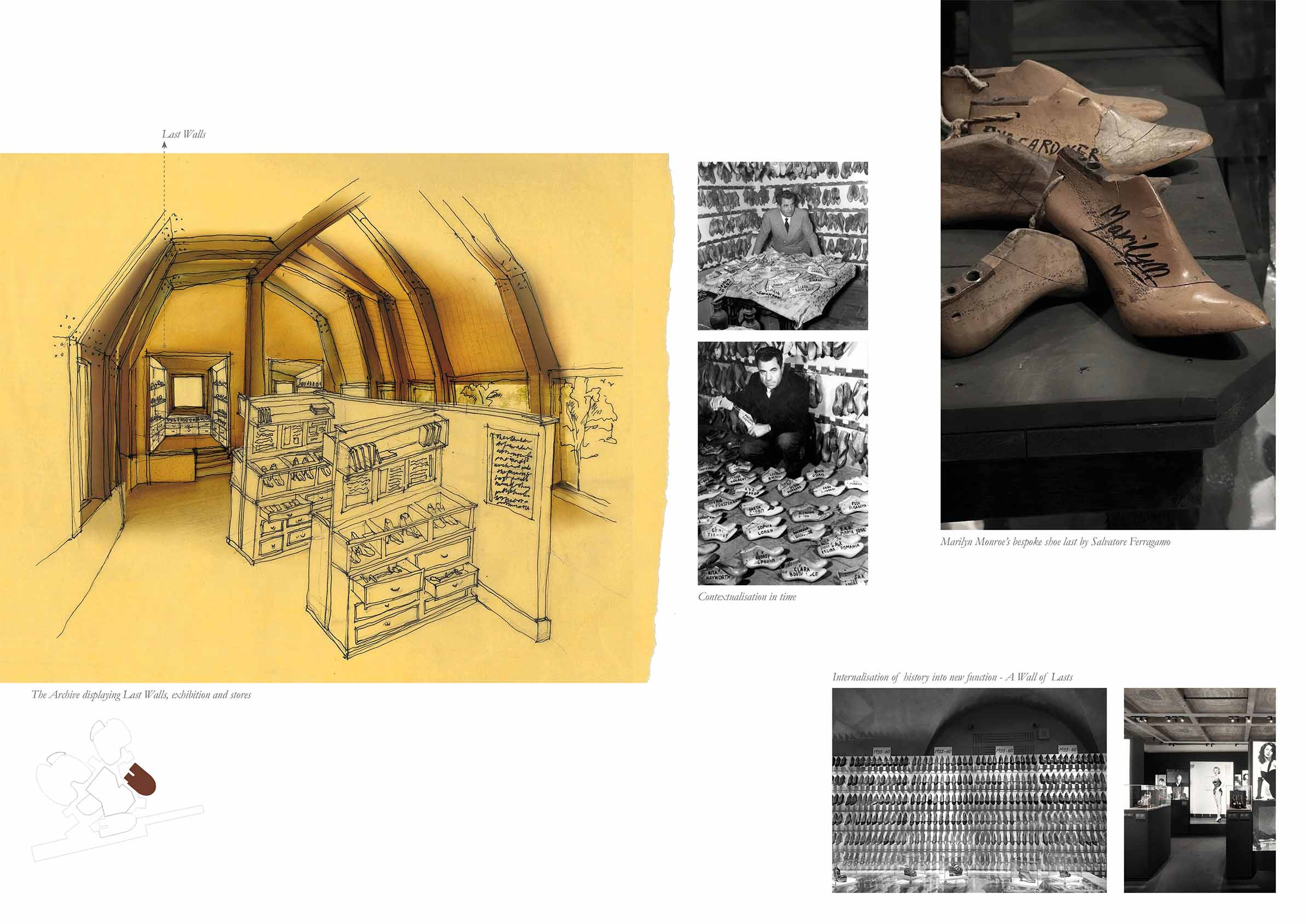
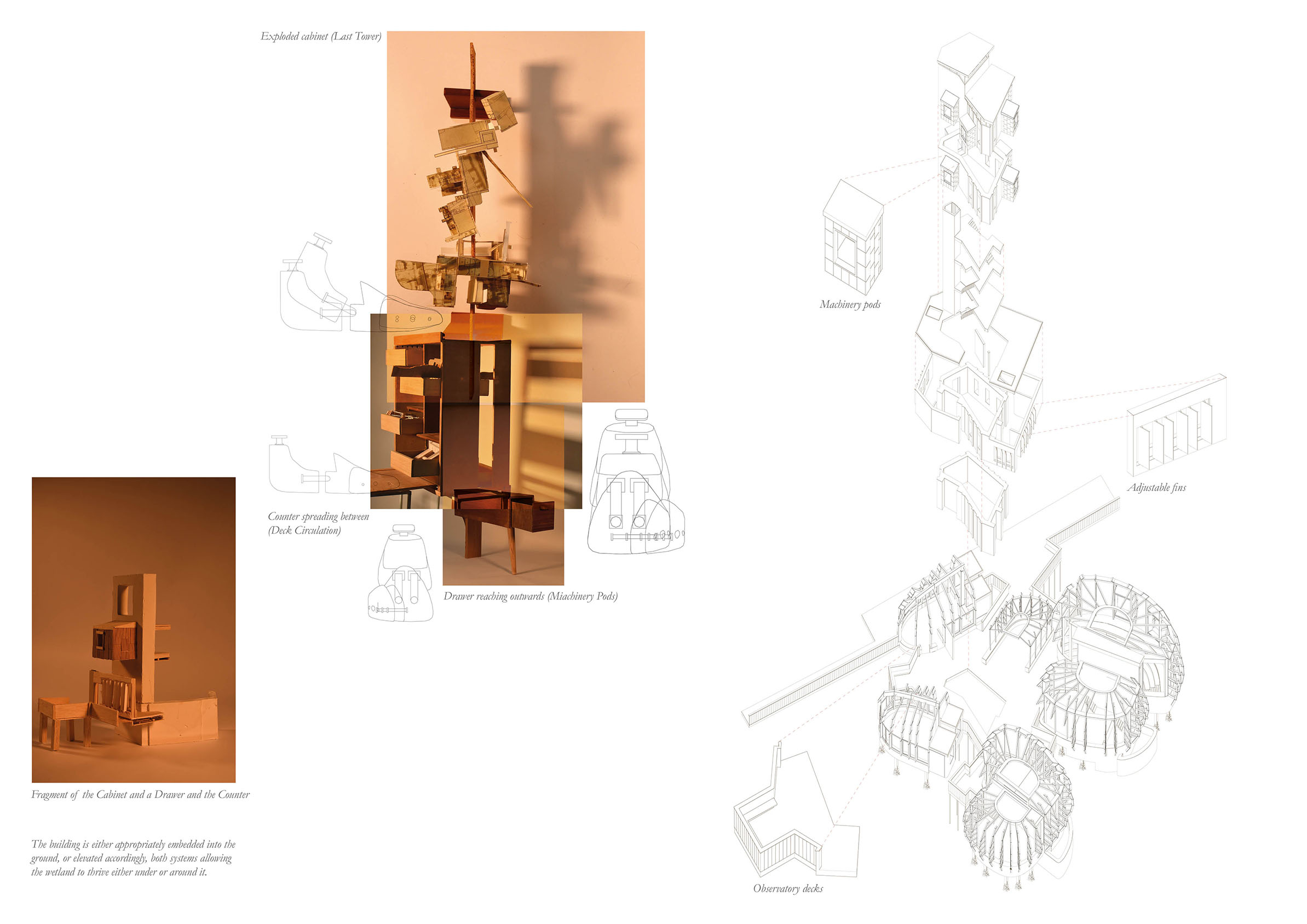
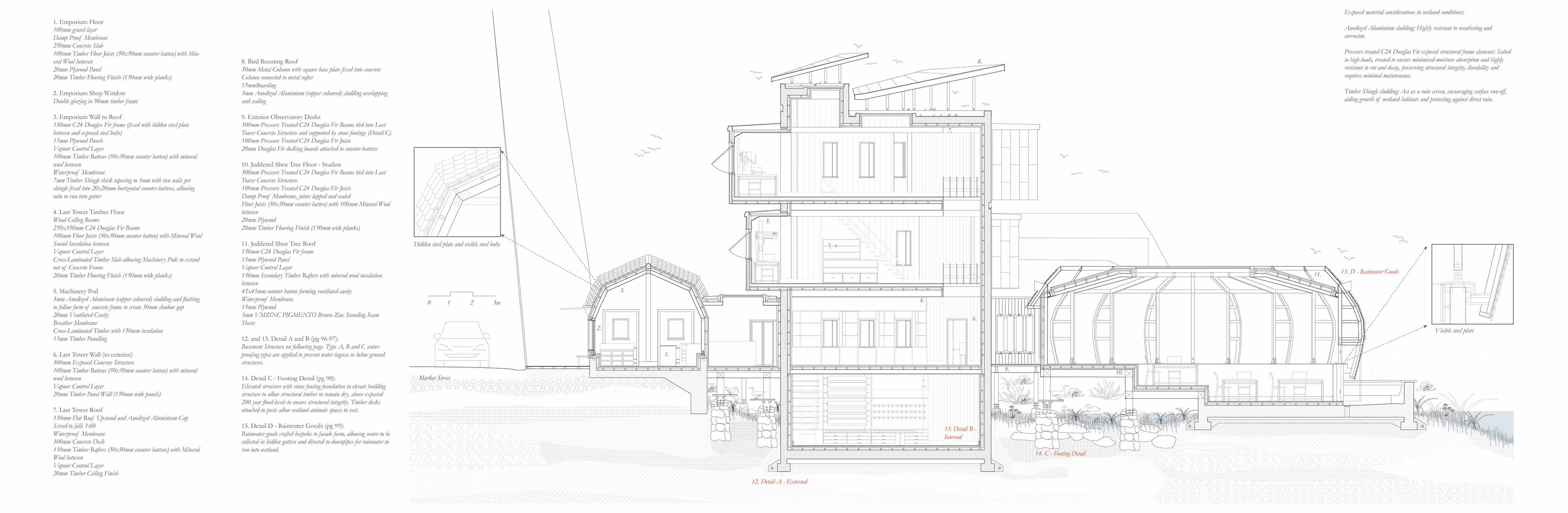
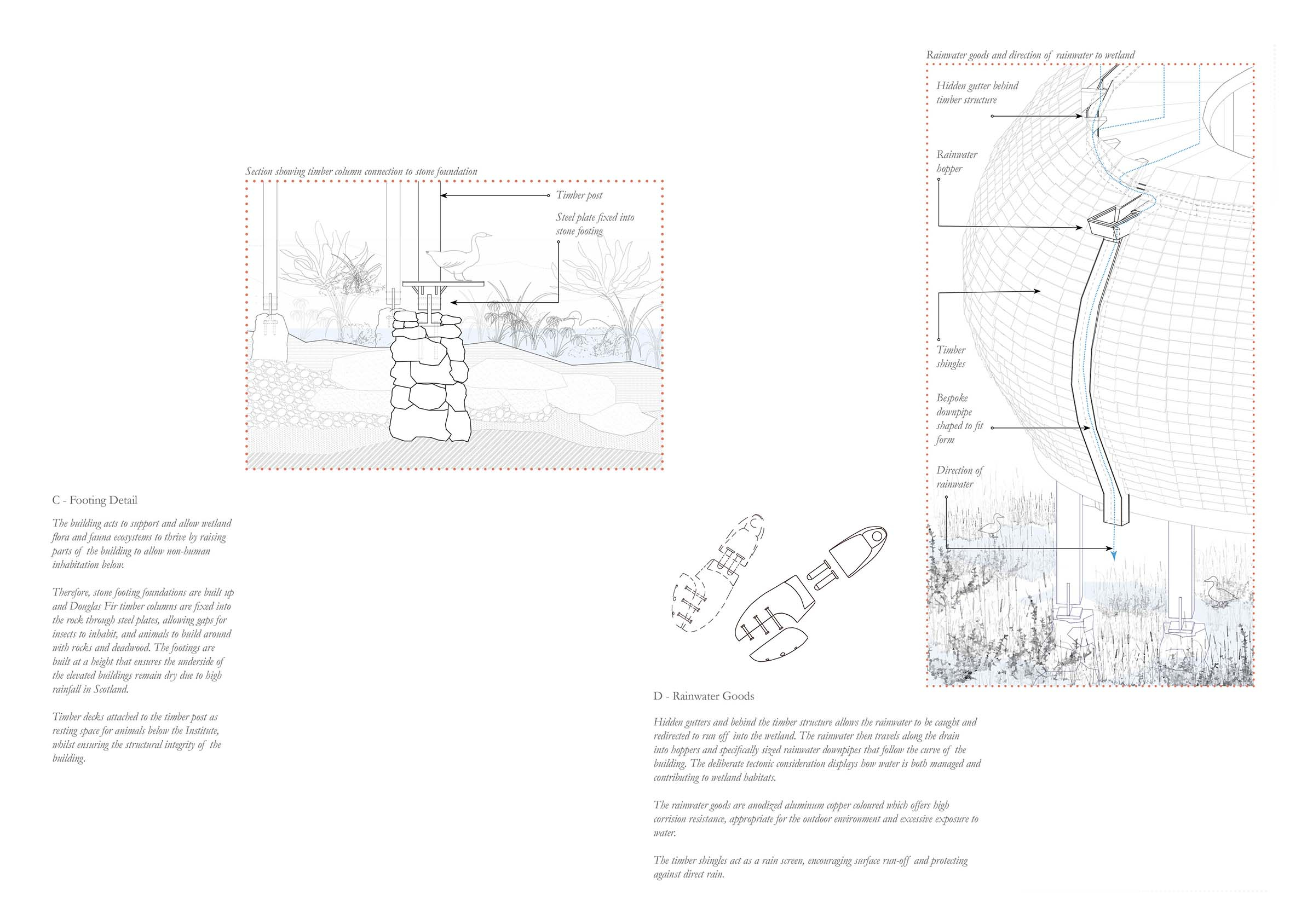
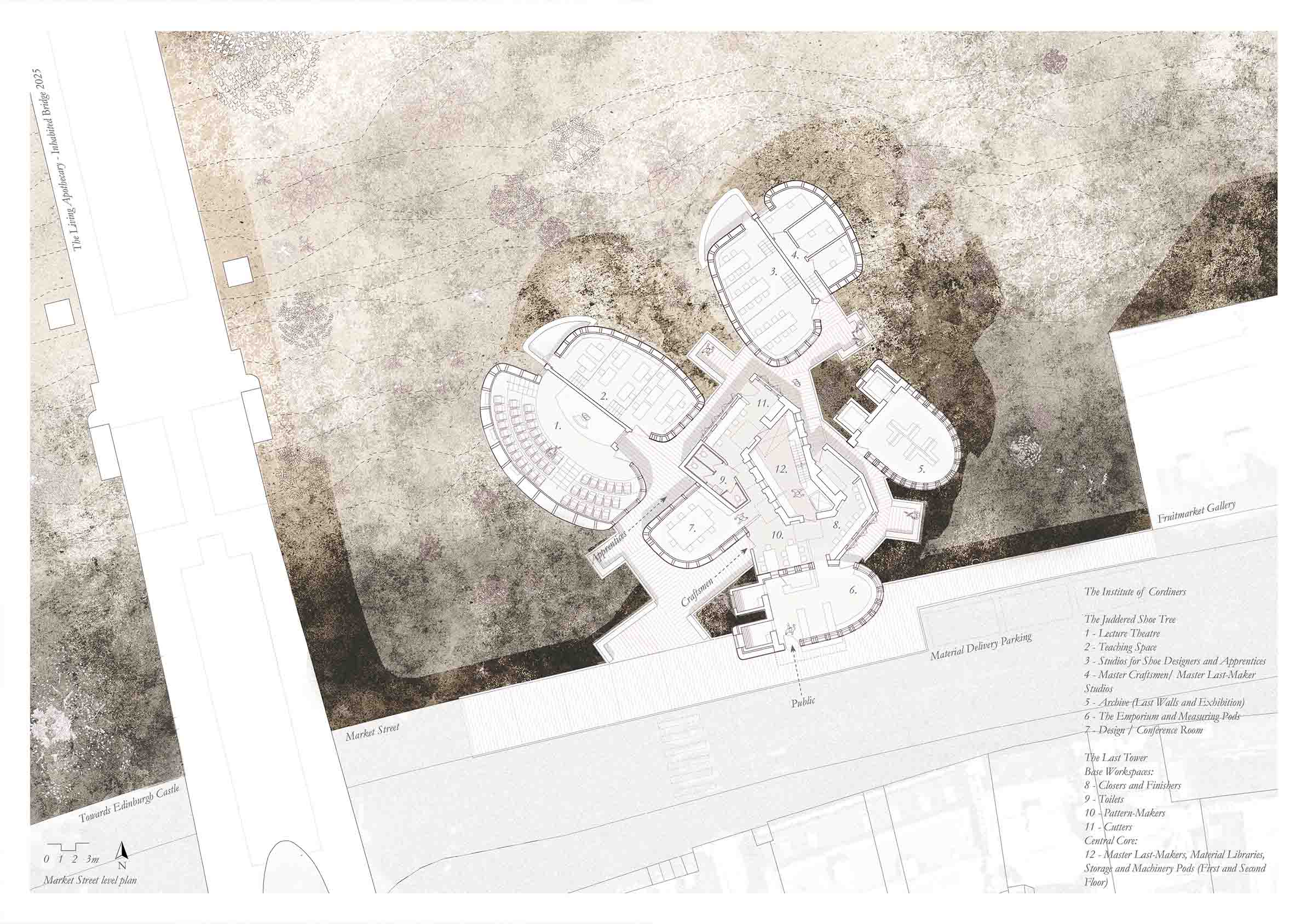
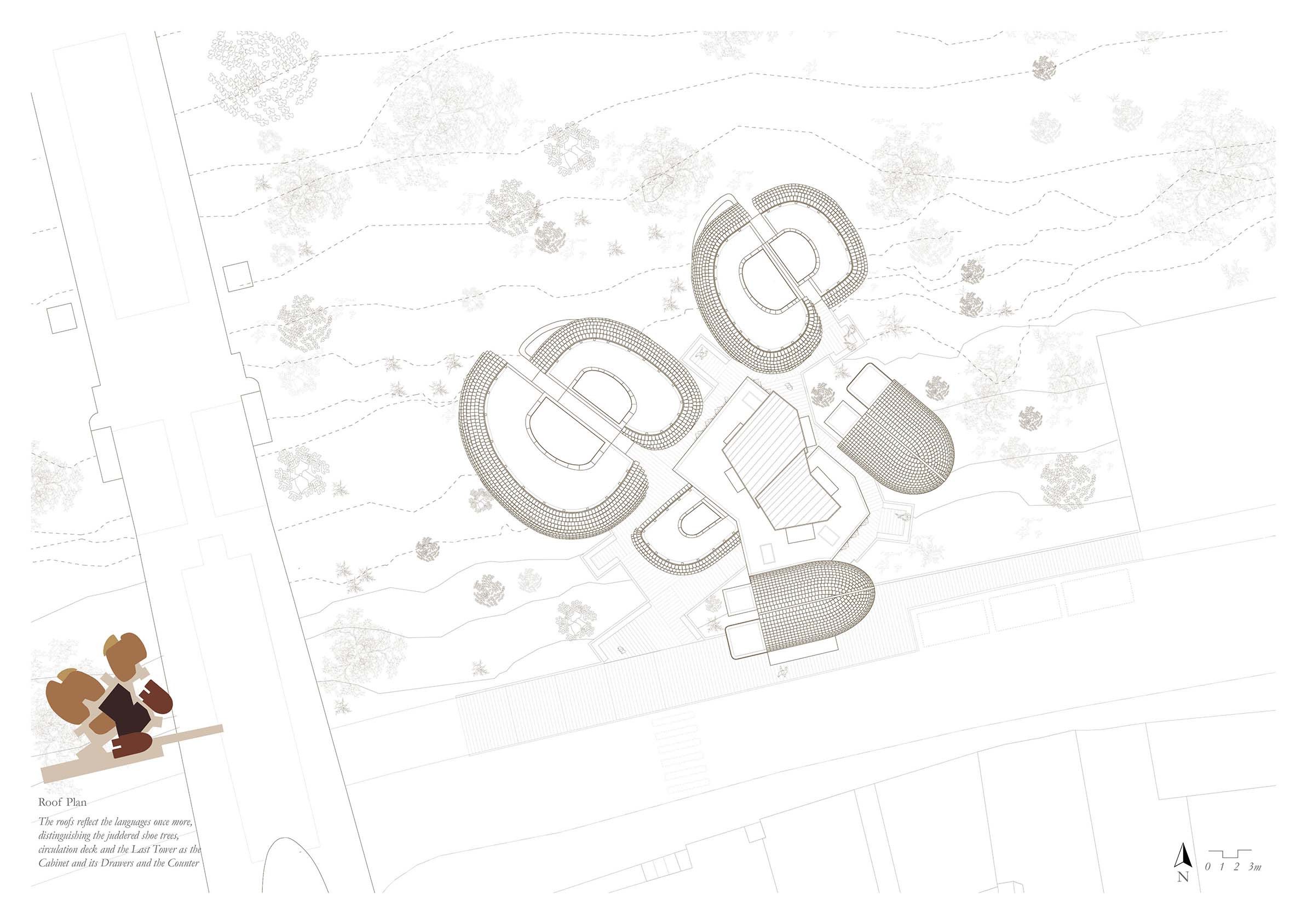
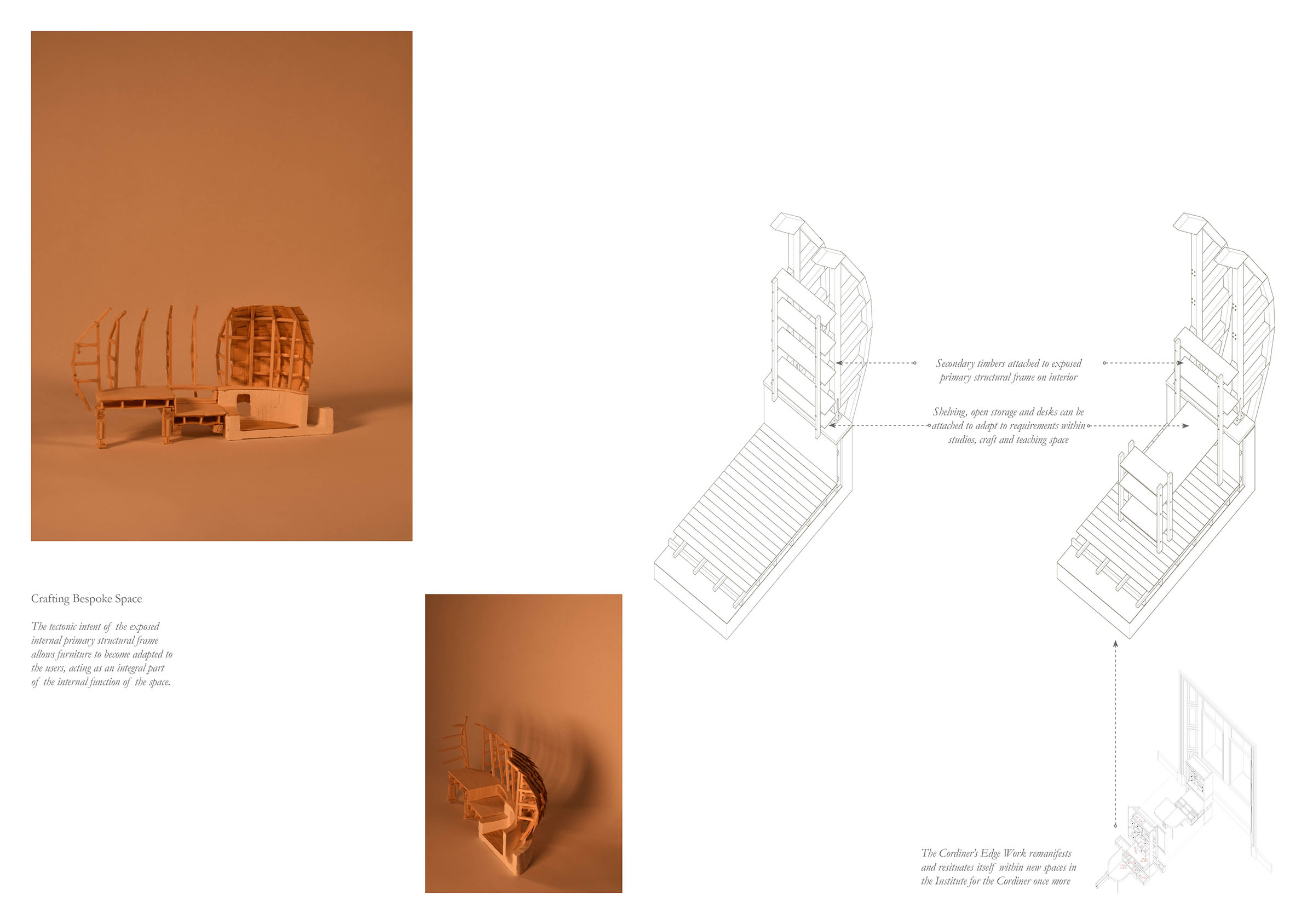
The Cordiner’s Bench, an archival device facilitating the shoe, becomes remodeled to allow rupture, forming the tectonic language of the Cordiner. Through the translation of its elements into an architectural system - the Cabinet and its Drawers, and the Counter, the Cabinet becomes the central Last Tower, holding productive space, material libraries, and the Drawers, its machines. The Counter spreads between the juddered shoe tree as observatory decks to the wetland, as spaces to sit, to walk, to look. The Counter holds the Emporium, the Archive, the School of Shoemakers, part grounded into the city, part stepped into the wetland, allowing non-human and human inhabitation within, beneath and above. The Cordiner’s demarcated edge is a place not bound by memory of the past, dragged from extinction, but an internalisation of its history, into reimagined function, for the present.

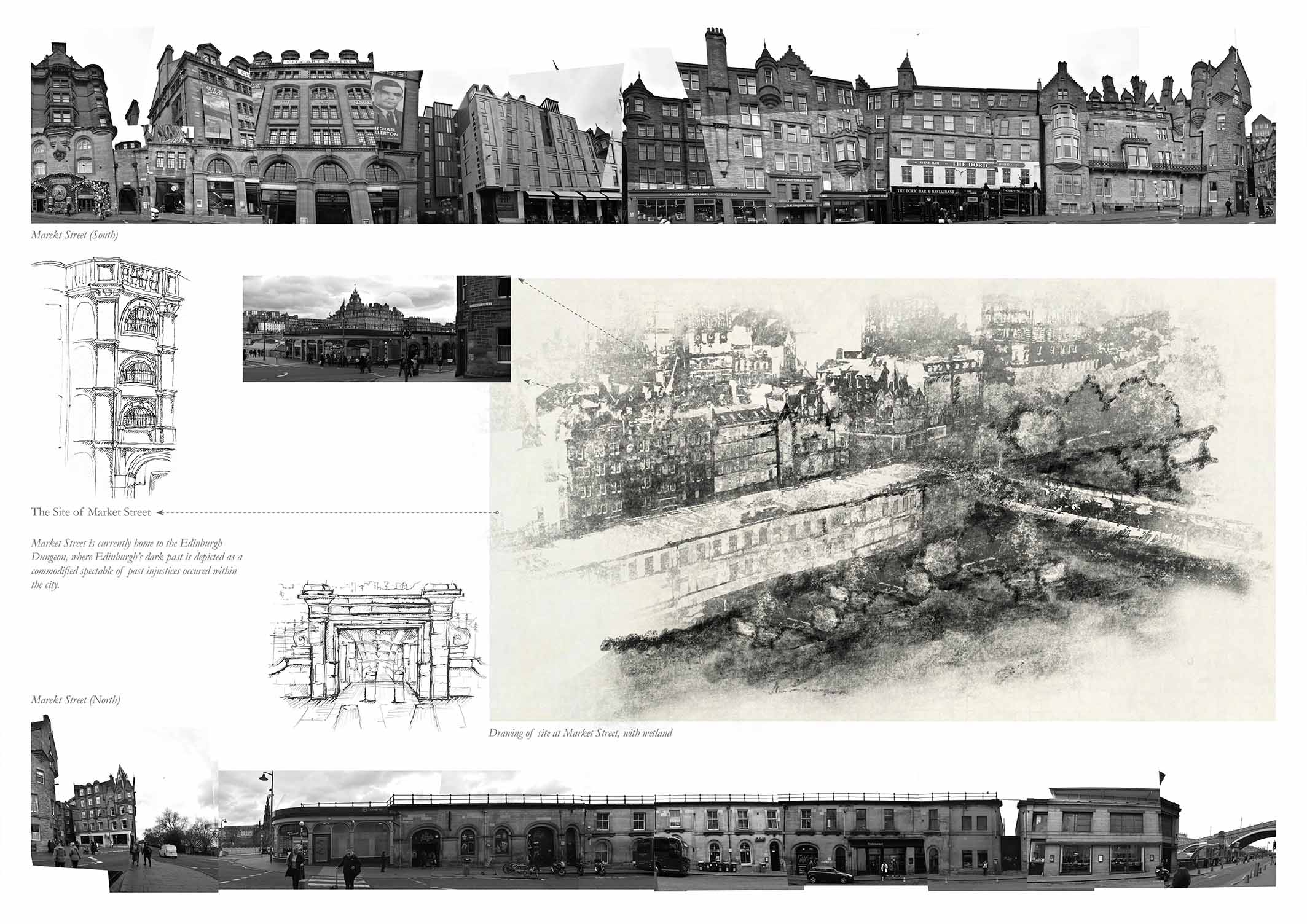
(Re)Molding Histories: Remembering Pasts



The Pattern of Parts: Translating Tectonic Language
As the material is formed over the last, the shoemaker calculates to precise perfection, accounting for the shoe to stretch, expand and adjust, crafting directly to the foot’s anatomy. After all, the shoe must fit, to allow the wearer to meet and wander the city.
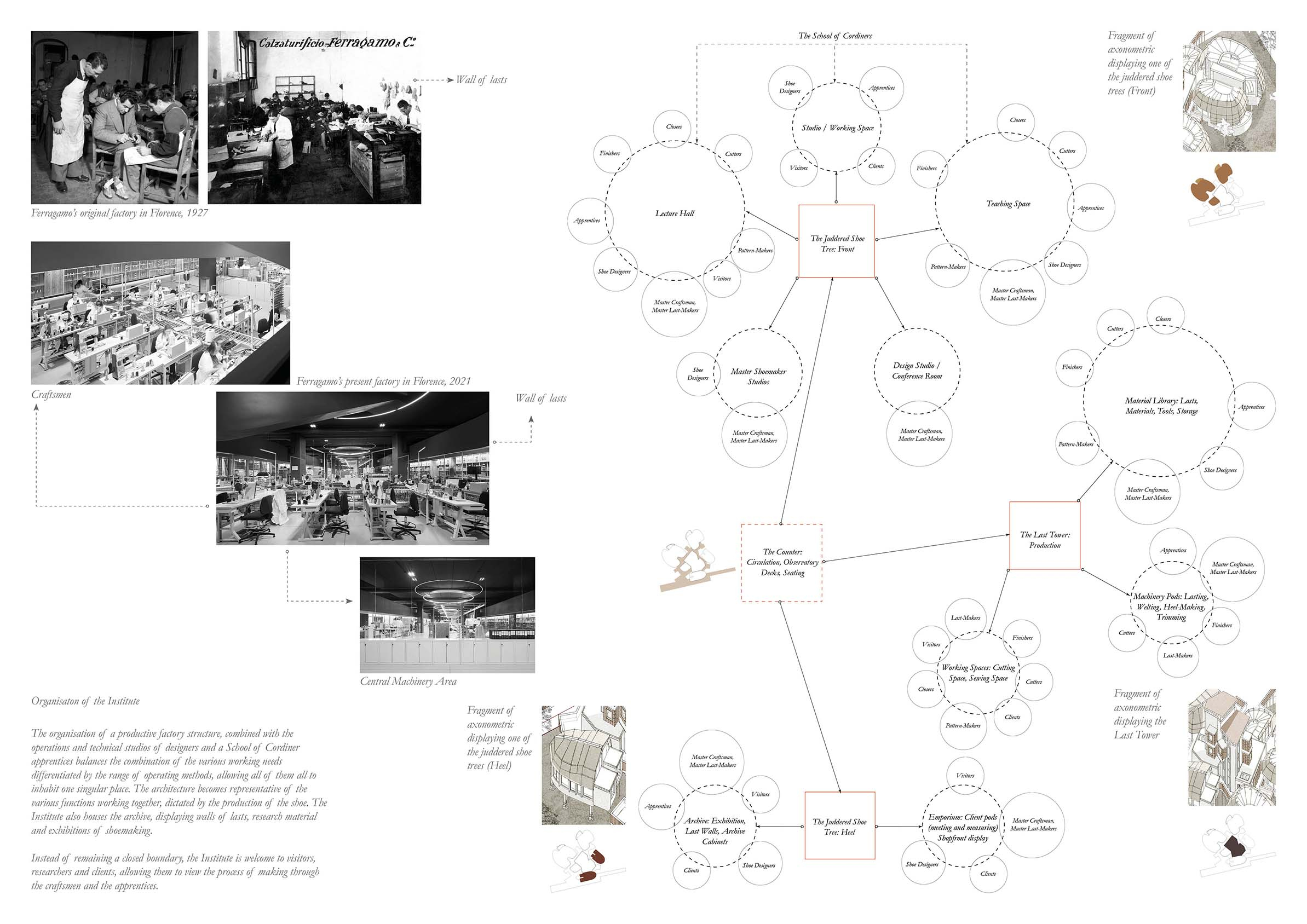
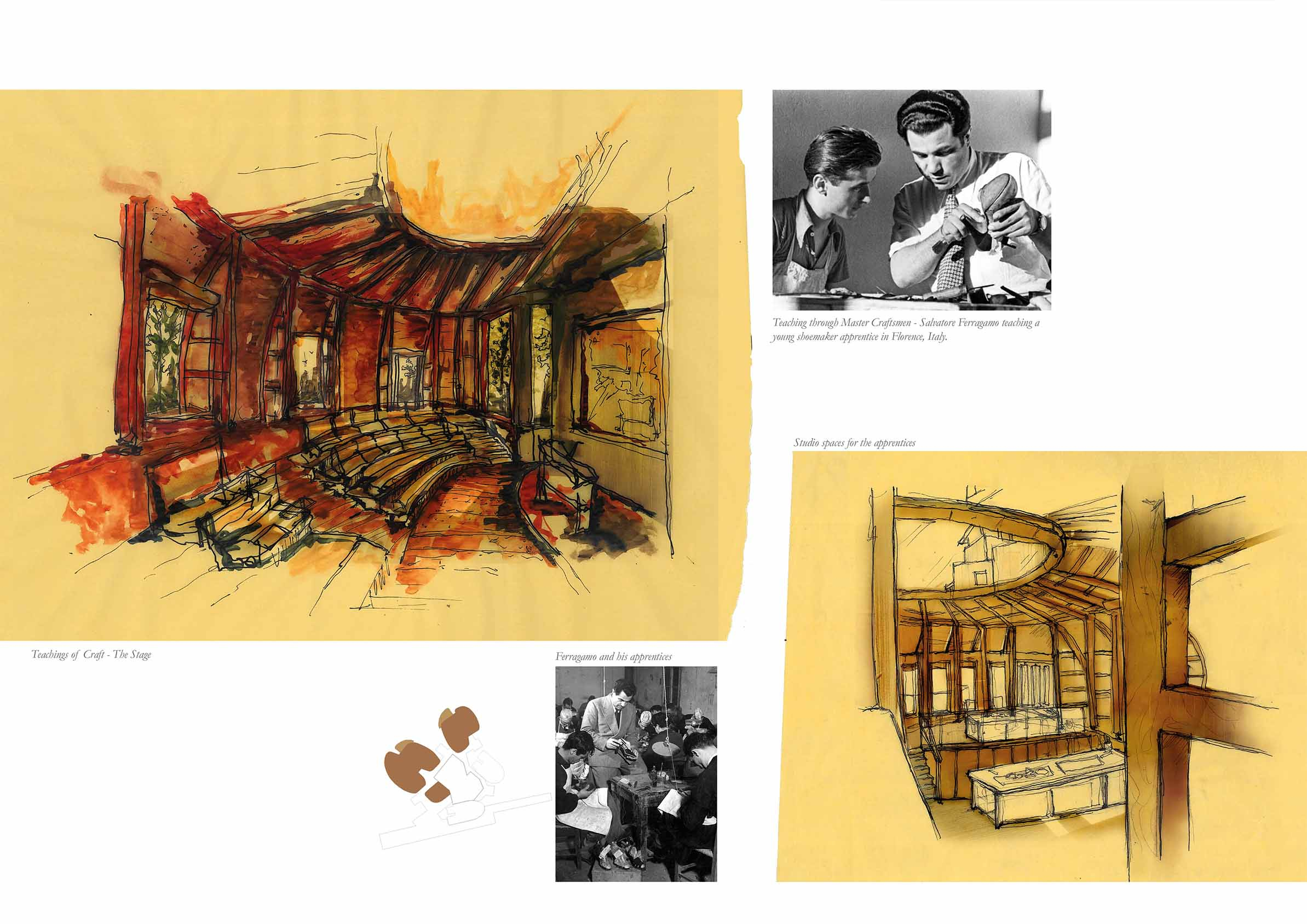
A system of craft by mass production appears to be a seeming paradox, yet the organisation of a School of Craft intertwined with the teachings by craftsmen within an active productive system open to the public allows shoemaking to be restored to contemporary status.
The organisation of a productive factory structure, combined with the operations and technical studios of designers and a School of Cordiner apprentices balances the combination of the various working needs differentiated by the range of operating methods, allowing all of them all to inhabit one singular place. The architecture becomes representative of the various functions working together, dictated by the production of the shoe. The Institute also houses the archive, displaying walls of lasts, research material and exhibitions of shoemaking. Instead of remaining a closed boundary, the Institute is welcome to visitors, researchers and clients, allowing them to view the process of making through the craftsmen and the apprentices.

The Language of the Cordiner: A Toolkit
Lastings and Finishings


The Cordiner’s Architecture



The Inhabited Edge: A Temporal Mediation
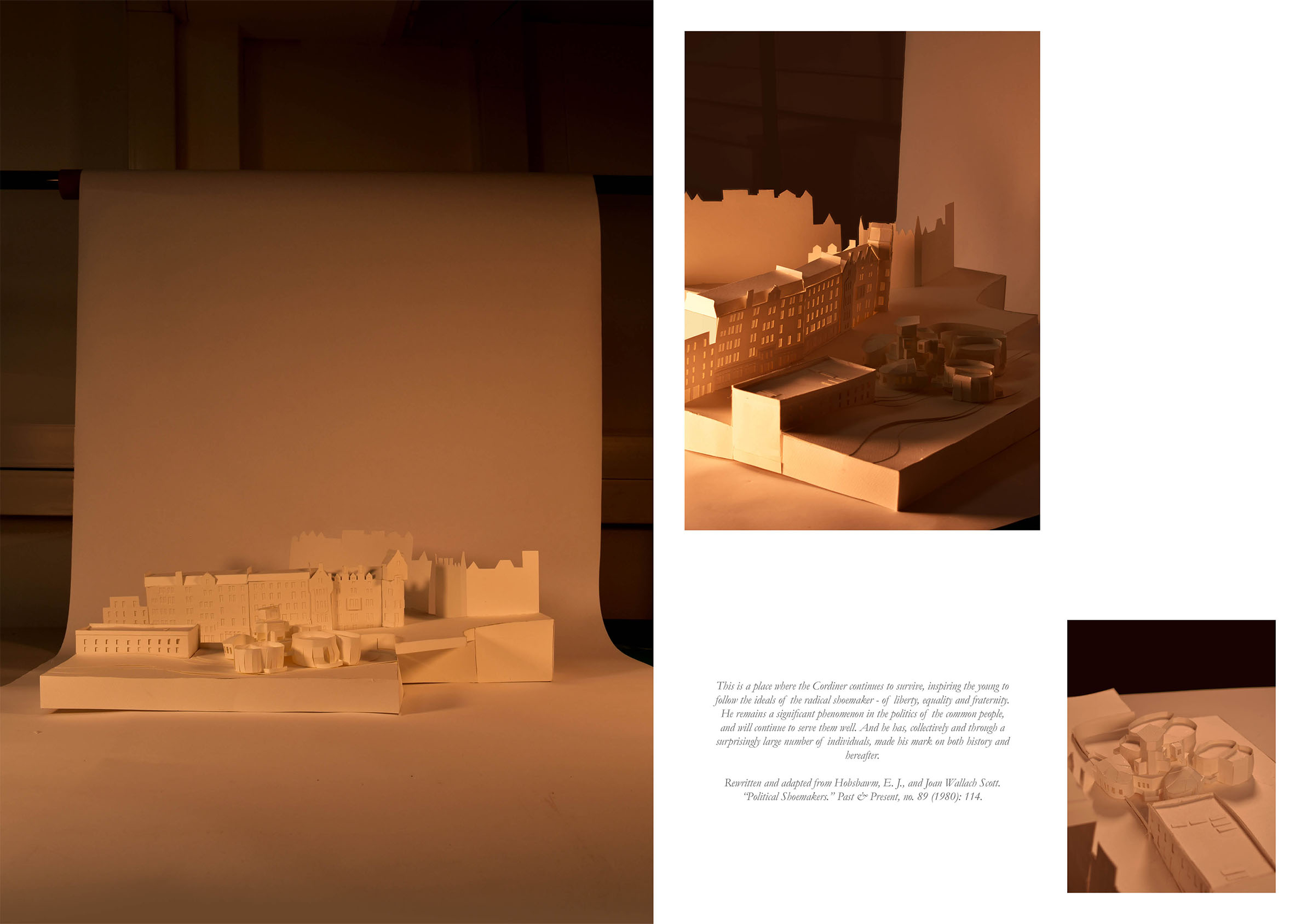
This is a place where the Cordiner continues to survive, inspiring the young to follow the ideals of the radical shoemaker - of liberty, equality and fraternity. He remains a significant phenomenon in the politics of the common people, and will continue to serve them well. And he has, collectively and through a surprisingly large number of individuals, made his mark on both history and hereafter.

Xindi Su
Vaulting the Cordiner's Edge: Crafting Lost Grounds
Follow:
Share: